7 Sustainable Alternatives to Fast Fashion That Fit a Minimalist Wardrobe
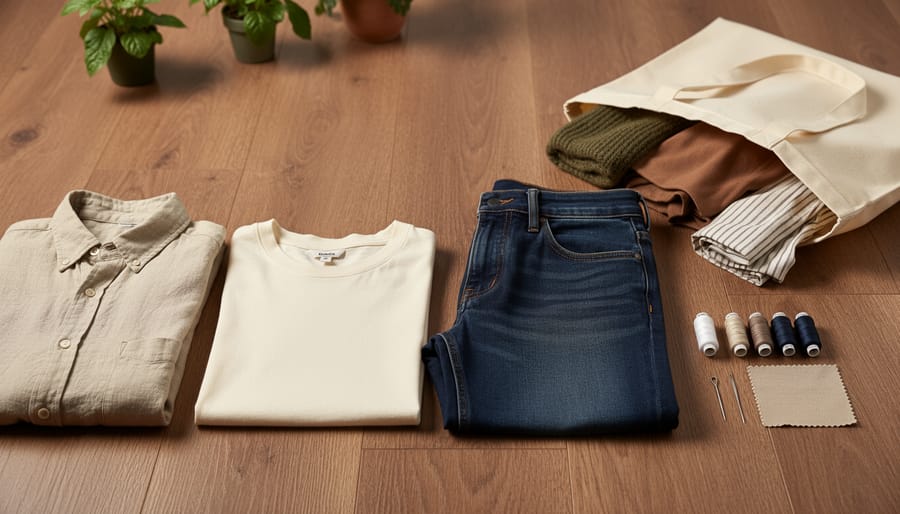
The best alternatives to fast fashion all come down to one move: buy less, and choose better when you do buy. That means shopping secondhand, investing in durable natural-fiber basics, mending what you own, swapping with friends and neighbors, renting for special occasions, buying new only from transparent, ethically made brands, and building a capsule wardrobe (a small, mix-and-match set of clothes you actually wear).
Why does this work? Fast fashion runs on volume. Cheap, trend-driven pieces are made quickly, worn a handful of times, then discarded. Each alternative on this list breaks that cycle by extending the life of clothing that already exists or by making sure new purchases earn their place in your closet. Producing and shipping garments at that scale adds to the broader climate change impact we’re all trying to reduce, and it takes a heavy toll on water conservation goals too, since textile production and dyeing are thirsty processes.
You don’t need to overhaul your wardrobe overnight, and you don’t need to feel guilty about what’s already in it. The seven options below are ordered from easiest to most involved, so you can start with a free swap or a thrift-store trip and work toward bigger changes at your own pace.
How We Chose These Seven Swaps for a Sustainable Minimalist Closet
Choosing seven swaps from a long list of sustainable fashion ideas meant setting a few simple rules. Each option on this list had to meet four criteria:
- It lowers environmental impact by cutting waste, water use, or new production.
- It supports a smaller wardrobe that you actually wear.
- It fits a normal budget or saves money over time.
- It’s easy to reach, whether through local options in Pennsylvania or online.
Those filters matter because Sustainable Minimalism is about owning fewer things that serve you well, not about chasing a perfect, spotless footprint. A swap that looks great on paper but drains your budget or sends you hours out of your way won’t stick.
You’ll also notice that no single swap suits everyone. Someone with a tight budget may lean on secondhand shopping and swaps, while someone with a few trusted favorites may care most about mending. Mix and match the ideas in whatever way fits your life.
And if you currently buy fast fashion, there’s no judgment here. Most of us started there, and the point is simply to offer easier, kinder choices you can adopt at your own pace.
1. Shop Secondhand: Thrift Stores, Consignment, and Online Resale
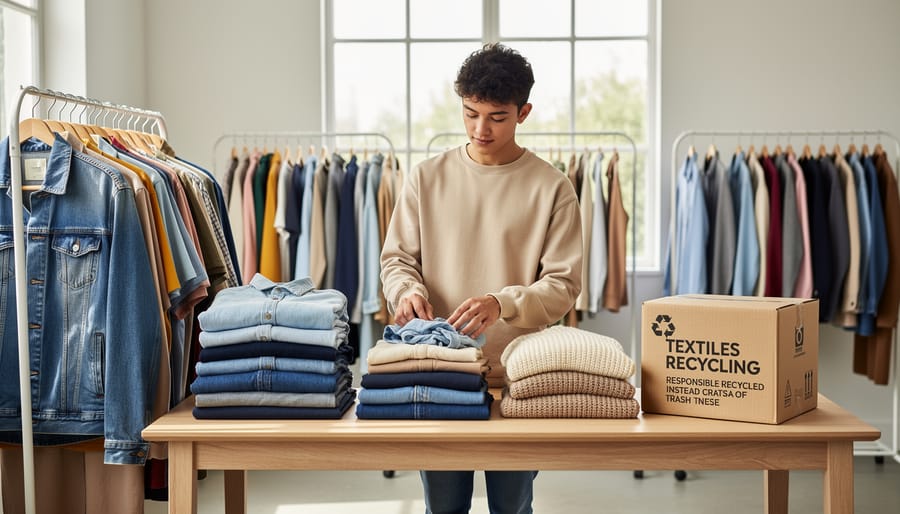
Buying secondhand is the simplest swap on this list because the garment already exists. Every pre-owned shirt or coat you wear is one that stays in use instead of heading to a landfill, and it means one fewer new item needs to be made. Nothing about it requires special skills, just a little patience.
You have plenty of places to look. Community thrift shops often carry a wide mix at low prices. Consignment boutiques tend to curate their racks, so you may find cleaner, more current pieces for a bit more money. Online resale platforms let you search by size, brand, and fabric from home, which is handy if you know exactly what you need.
Thrifting works best with a minimalist mindset, because a rack full of cheap options can quietly turn into clutter. A few habits help:
– Go in with a list. Know the gap you are filling, such as a plain wool sweater or a pair of dark jeans, and stick to it.
– Check fabric and seams. Look for even stitching, intact lining, and fabric that is not thinning, pilled, or stained.
– Try it on, or check the measurements. A great price means little if it does not fit.
– Skip the “bargain” you will not wear. If you cannot picture three outfits with it, leave it behind.
A smaller, well-chosen haul beats a bag of impulse buys every time.
2. Invest in Durable, Natural-Fiber Basics Built to Last
A $120 wool sweater you wear 100 times costs $1.20 per wear. A $15 top that falls apart after five washes costs $3 per wear, and then it’s gone. That’s the idea behind “cost per wear”: divide the price by how many times you’ll realistically wear something. Fewer, better pieces tend to win, which is exactly what Sustainable Minimalism asks of a closet.
Fabric matters as much as price. Natural fibers come from plants or animals: cotton, wool, linen, and hemp. Synthetic fibers, like polyester, nylon, and acrylic, are made from petroleum-based plastics. Every time synthetics go through the wash, they shed tiny plastic fragments called microplastics, which slip through filters and into waterways. They’re one small piece of the larger problem of plastic pollution. Natural fibers don’t shed plastic, and they usually breathe better and age more gracefully.
Before you buy, run through a quick quality check:
– Stitching: Look for tight, even stitches with no loose threads.
– Seams: Tug gently at the seams. They should hold firm and lie flat.
– Fabric weight: Hold it up to the light. Fabric that feels substantial and isn’t see-through tends to last longer.
– Repairable construction: Check for real buttons, sturdy zippers, and enough seam allowance to alter or mend later.
A piece that passes these tests can stay in your closet for years.
3. Mend, Alter, and Care for What You Already Own
The greenest garment is the one already hanging in your closet. Every piece you keep wearing means one less item made, shipped, and eventually thrown away, so repair is often the most sustainable choice on this list.
You don’t need to be handy to get started. Three basic skills cover most problems. Sewing on a button takes a needle, thread, and about five minutes. A small patch, sewn or iron-on, can give worn knees or elbows years more life. A simple hem keeps pants from dragging and fraying at the bottom. Plenty of free video tutorials walk you through each one, and your first attempts don’t need to be perfect. A visible mend can even look good.
For bigger jobs, like taking in a jacket, replacing a zipper, or reshaping a favorite coat, a local tailor or repair shop is worth the modest cost. It’s usually far cheaper than replacing the piece, and the result often fits better than anything off the rack.
Daily care matters just as much. Try these habits:
– Wash less often. Many items only need washing after several wears.
– Choose cold water, which is gentler on fibers and uses less energy.
– Air dry when you can, since high dryer heat wears fabric down faster.
Start with one small fix this week and see how satisfying it feels.
4. Swap Clothes with Friends, Neighbors, and Community Groups
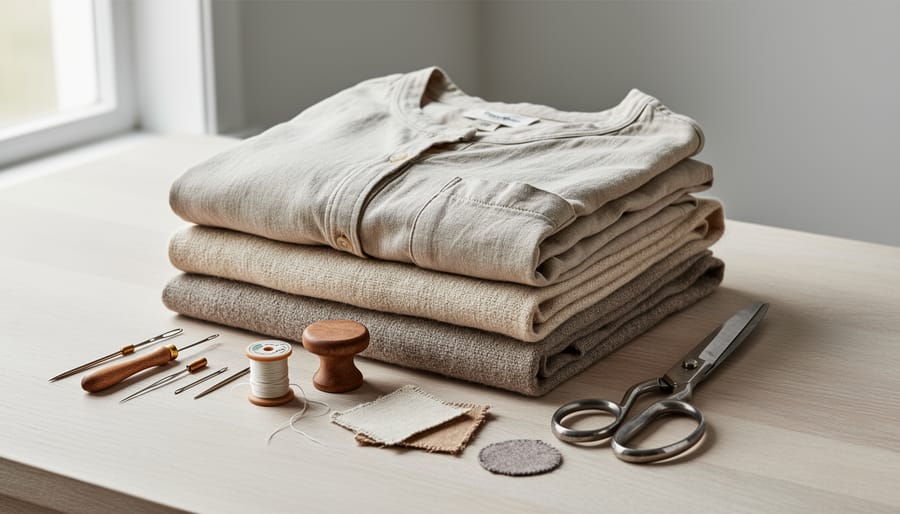
A clothing swap is exactly what it sounds like: people bring clothes they no longer wear and take home pieces that are new to them. Nothing is bought, and every garment gets another round of use instead of sitting in a closet or heading to the landfill.
You can host a small swap at home or join a community event. Hosting is easier than it sounds:
1. Invite five to ten friends or neighbors a couple of weeks ahead.
2. Ask everyone to bring clean, wearable items in good condition.
3. Set out a table or rack so pieces are easy to browse.
4. Agree on a simple rule, like one-for-one or take what you’ll truly wear.
5. Donate whatever is left to a local thrift shop.
If you’d rather not organize anything, check community centers, libraries, and neighborhood groups. Many post swaps or gatherings on bulletin boards or in local online groups.
For a minimalist, the best part is that you can try a piece before committing to it. If it doesn’t earn a place in your rotation, pass it along again.
5. Rent Clothing for Special Occasions
Some outfits are made for one day. A wedding guest dress, a formal gown, or a suit for a single interview often gets worn once, then sits in the back of the closet. Renting lets you wear the piece and send it back, so one garment serves many people instead of gathering dust.
Renting makes the most sense for weddings, galas, proms, job interviews, and other formal events where you need something polished but don’t expect a repeat performance. Before you book, check a few things:
– Fit: Look at the size chart closely, and order a backup size if the rental service offers one.
– Return deadline: Late fees can erase your savings, so note the return date right away.
– Cleaning: Many services handle professional cleaning, but confirm what’s included so you aren’t surprised.
– Cost: Compare the rental fee with the purchase price, and with how many times you would realistically wear the item.
Renting works best for occasional pieces, not everyday basics. For jeans, tees, and coats you’ll wear weekly, buying durable secondhand or well-made items will serve you better.
6. Choose Transparent, Ethically Made Brands When You Buy New
Sometimes buying new is the right call. Underwear, work shoes, a winter coat that has finally given out: not everything can or should come from a thrift rack. When that happens, the goal is to judge a brand by what it shows you, not by what it says about itself.
Start with greenwashing, which simply means a company making itself sound more environmentally friendly than it really is. Words like “eco,” “conscious,” or “planet-friendly” with nothing behind them are a warning sign. Look for specifics instead: what the fabric is made of, where the garment was sewn, and whether the company explains how it treats the people who made it. A brand that is proud of its supply chain usually says so plainly.
Check, too, whether a brand will help you keep a garment in use. Repair services, replacement parts, and take-back programs for worn-out clothing suggest a company expects its products to last.
Third-party certifications can help, at a general level. Some focus on how fibers like cotton or wool are grown, others on chemical safety in textiles, and others on factory working conditions. Each covers only one slice of the picture, so treat a label as a clue, not a guarantee.
Even the most transparent brand is still making something new. Buying less remains the biggest lever you have.
7. Build a Capsule Wardrobe Around Pieces You Truly Wear

A capsule wardrobe is a small, mix-and-match collection of versatile pieces that you actually wear and that work well together. It’s Sustainable Minimalism in practice: owning fewer things, chosen with care, so each one earns its place and lasts longer. If you want more ways to apply that mindset beyond your closet, these sustainable lifestyle tips are a good next stop.
Here’s a simple way to build yours:
1. Audit what you wear. For a few weeks, notice which pieces you reach for and which ones hang untouched. Your habits show you what really works.
2. Pick a simple color palette. Choose a few neutral shades and one or two accent colors. When everything coordinates, a small set of clothes makes many outfits.
3. Keep what works. Hold on to pieces that fit well, feel good, and match your palette. Repair anything that just needs a small fix.
4. Pass the rest along responsibly. Don’t clear everything out at once. Donate, swap, resell, or recycle unworn items over time so they stay in use instead of ending up in the trash.
There’s no magic number of items to aim for. Some people thrive with 30 pieces and others with 60. The goal is intention, a closet where you know and love what’s in it.
Common Questions About Moving Away from Fast Fashion
Moving away from fast fashion works best as a series of small, steady changes, and a few common worries come up for almost everyone. Here are straight answers to the ones readers ask most.
Is sustainable fashion too expensive?
It doesn’t have to be. Secondhand shopping, clothing swaps, and mending cost little or nothing, and buying fewer, longer-lasting pieces often saves money over time.
What should I do with clothes I no longer want?
Pass them along instead of tossing them. Offer wearable items to friends, bring them to a swap, or resell them, and take your time rather than clearing out the whole closet at once.
Are synthetic fabrics always bad?
Not always. Synthetics shed tiny plastic fibers called microplastics when washed, but a polyester jacket you wear for ten years can still be a sensible choice. The most responsible garment is usually the one you keep using.
Where do I start?
Pick one swap that fits your life, such as thrifting your next purchase or mending one item you’ve set aside. There’s no need to overhaul your wardrobe overnight.
None of these questions has a perfect answer, and that’s fine. Nobody is judging where your closet comes from today. What matters is making the next choice a little more thoughtful than the last, and letting the habit build from there.
Start Small, Dress Well, and Let the Habit Grow
You don’t need to overhaul your closet to make a real difference. Pick one or two swaps from this list that fit your budget, your schedule, and your taste, whether that’s a weekend thrift run, a sewing kit for small repairs, or a swap with a few friends. Stick with them, and the benefits stack up quietly: a smaller closet, fewer regrets, and more money left in your pocket.
Each garment you keep wearing is one less that needs replacing. Start small, stay consistent, and let the habit grow at its own pace.