How to Teach Water Safety for Parents and Caregivers: Protecting Families Around Water
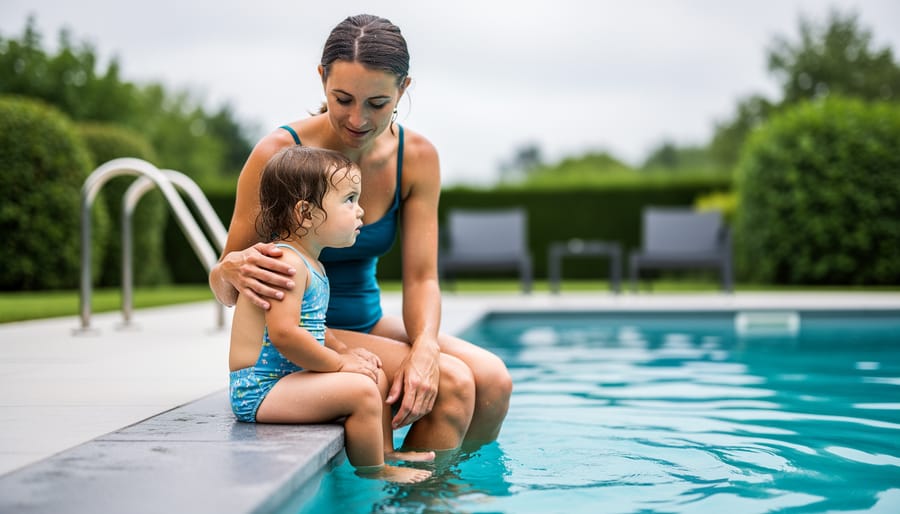
Preventing childhood drowning requires three layers of protection: active supervision within arm’s reach, multiple barriers between children and water, and immediate CPR capability. These aren’t optional safety suggestions. They’re the evidence-based minimum that separate close calls from tragedies, and every caregiver in Pennsylvania needs to understand them before the next pool visit, lake trip, or even bath time.
Drowning is fast and silent. It doesn’t look like the splashing, shouting emergencies portrayed on television. A child can slip under the surface in seconds and lose consciousness in two minutes, often while adults are nearby but distracted. This speed is precisely why prevention must become as automatic as buckling a seatbelt, woven into your sustainable routines rather than treated as an afterthought.
The good news? Drowning is almost entirely preventable when caregivers apply the right strategies consistently. Pennsylvania families have year-round water exposure, from backyard pools and the Susquehanna River to Lake Erie beaches and neighborhood splash pads. Each environment presents distinct hazards, but the protective principles remain the same.
This guide walks you through exactly what equipment to install, how to supervise effectively during water activities, which dangers require immediate attention, and what to do if something goes wrong. You’ll also learn how local Pennsylvania water safety experts verify that your approach actually works, not just in theory but in the real moments when children need protection most.
Why Water Safety Matters for Every Family
Drowning remains the leading cause of unintentional injury death for children ages one to four in the United States, claiming hundreds of young lives each year. For every child who drowns, another five receive emergency care for nonfatal submersion injuries that can cause lasting brain damage. These aren’t just statistics from distant places, Pennsylvania families face these risks at backyard pools, community swimming areas, and the state’s abundant lakes and rivers.
What makes water hazards particularly dangerous is how quickly tragedy can unfold. A toddler can drown in less than two minutes and in as little as two inches of water. Bathtubs, toilets, buckets, and even decorative garden ponds pose real threats to young children, whose curiosity and top-heavy body proportions make them especially vulnerable to falling in headfirst and becoming trapped.
Children’s vulnerabilities shift as they develop. Infants and toddlers under three lack the motor skills to lift themselves from water and don’t understand danger. Preschoolers can move fast but have poor judgment about their swimming abilities. School-age children often overestimate their skills, especially in open water with currents or changing depths. Even teenagers face heightened risk when peer pressure encourages risky behavior around water.
Common recreational hazards include unmarked depth changes at swimming holes, strong currents in rivers, sudden drop-offs at lake beaches, and cloudy water that obscures submerged hazards. At home, unsecured pool access and momentary lapses in supervision create opportunities for tragedy.
Prevention is both the most effective and most sustainable approach to water safety. Unlike treatment after an incident, prevention costs nothing beyond vigilance and simple barriers. When families build strong safety habits, they protect children while preserving the joy of water activities, allowing generations to safely enjoy Pennsylvania’s aquatic environments without fear or regret.
Essential Gear and Preparation Before Any Water Activity
Choosing the Right Life Jacket for Your Child
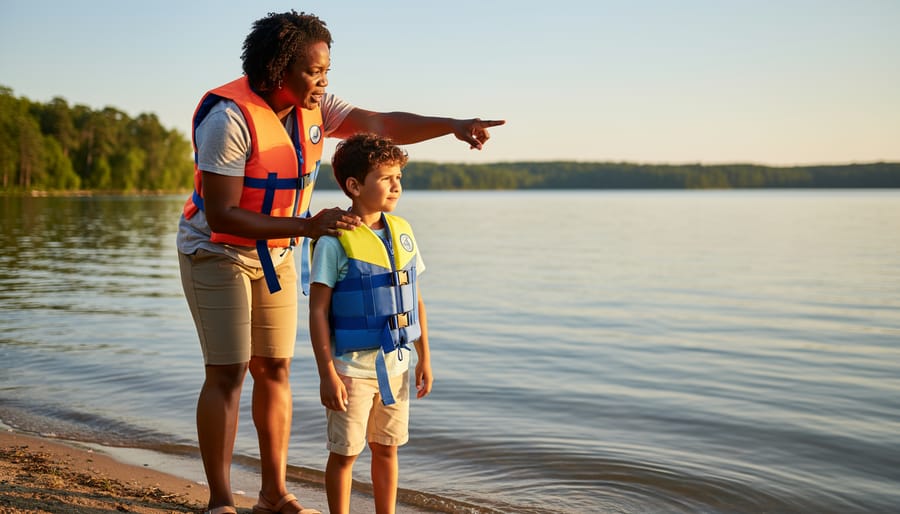
A properly fitted life jacket can save your child’s life, but only if you choose the right one. Ignore the age ranges printed on most life jackets, weight is what matters. Coast Guard-approved personal flotation devices (PFDs) are rated by weight ranges, typically starting at under 30 pounds for infants and progressing upward. Check the label inside the jacket for this rating and your child’s current weight, not their age.
For young children and non-swimmers, Type II PFDs turn unconscious wearers face-up in calm water, while Type III jackets offer more freedom of movement for active swimmers but won’t necessarily flip them over. Recreational boating and lake activities usually call for Type III, whereas Type II suits less confident swimmers better.
The fit test is non-negotiable: lift your child by the jacket’s shoulders. If the jacket rides up past their ears or chin, it’s too large and could slip off in water. The jacket should feel snug without restricting breathing. Adjust all straps every time your child wears it, kids grow fast.
Inspect PFDs before each season for tears, waterlogging, broken buckles, or faded buoyancy foam. Sun damage and mildew compromise flotation. Replace jackets that fail inspection immediately, regardless of how new they look.
Home Pool Safety Equipment
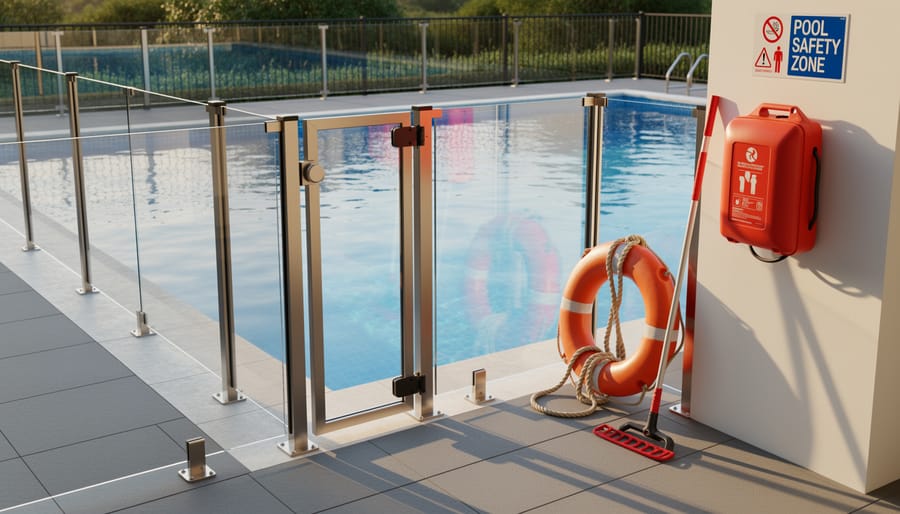
Home pool owners need multiple layers of protection equipment that work together to prevent unsupervised water access. Start with a four-sided fence that completely separates your pool from the house, standing at least four feet high with self-closing, self-latching gates. The latch should sit out of a child’s reach, ideally 54 inches above ground.
Install a pool alarm that sounds when the water surface is disturbed. These devices detect waves created by a child entering the water and alert you within seconds. Many models let you temporarily disable them during supervised swim time, but you must reactivate the alarm immediately afterward.
Safety covers designed for pools provide a physical barrier when the pool isn’t in use. Choose covers that meet ASTM standards and can support weight without sagging into the water. Lightweight floating covers don’t prevent drowning and create additional hazards.
Keep rescue equipment poolside: a reaching pole, life ring with rope, and cordless phone for emergencies. Store a first aid kit in a waterproof container within steps of the pool. Check all equipment monthly for wear, tears, or malfunction. Replace batteries in alarms twice yearly, and test the alarm function weekly during swim season.
Critical Safety Warnings and Risk Factors
Certain conditions demand immediate action or complete avoidance. Recognize these dangers before they escalate into emergencies.
Never allow children near water when adults have been drinking alcohol. Impaired judgment and delayed reaction times make supervision impossible. A single distraction can prove fatal.
Thunderstorms and lightning require evacuation at first rumble or flash. Water conducts electricity, and open areas around pools, lakes, and beaches offer no protection. Get everyone indoors immediately, not just under a shelter.
Cold water below 70°F poses hypothermia risk even on warm days, especially for children who lose body heat faster than adults. Shivering, confusion, or blue lips signal danger. Limit exposure and warm children gradually if these signs appear.
Murky or discolored water masks hazards and makes rescue difficult. Green algae blooms contain toxins that cause illness through skin contact or accidental swallowing. Check local water quality reports before swimming in natural waters, and recognize that climate change affects algae patterns and water temperatures in Pennsylvania’s lakes and rivers.
Rip currents at beaches create the illusion of calm water but pull swimmers away from shore. If caught, swim parallel to shore until free of the current, then angle back. Never enter water with visible currents if you’re unsure of their strength.
Fast-moving water after storms carries debris and creates unpredictable currents. What looks ankle-deep can knock an adult off their feet. Stay out until flow returns to normal.
Step-by-Step Water Safety Practices for Parents
Step 1: Establish Supervision Zones and Assign a Water Watcher
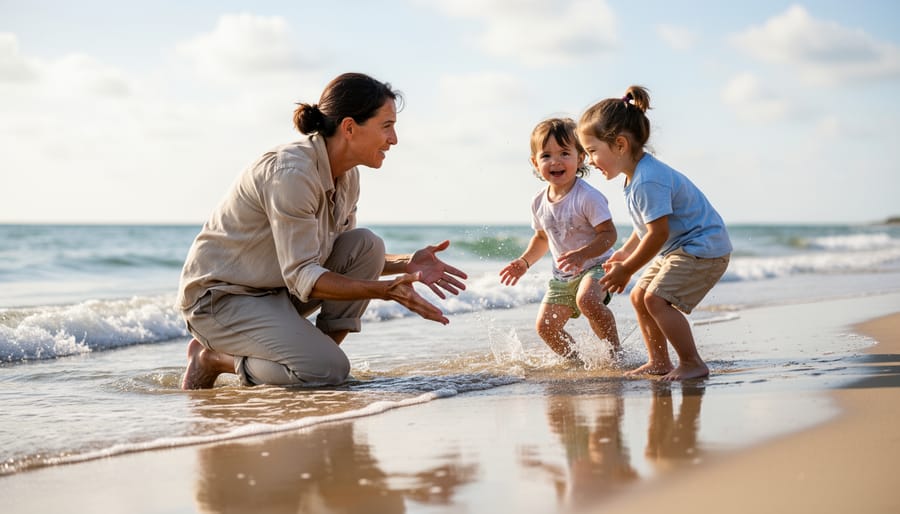
The “water watcher” role means one adult takes complete responsibility for supervising children in or near water, with no distractions. This person doesn’t check their phone, chat with other adults, or read, their sole job is watching the water. When multiple families gather, clearly identify who holds this role at any given time.
Start by establishing visible supervision zones. Use pool lane markers, beach flags, or natural landmarks to define where children can swim. Make these boundaries obvious to kids and all adults present. Younger children and non-swimmers stay in shallow designated areas within arm’s reach of the water watcher. Older, competent swimmers get a defined deeper zone that’s still fully visible.
Rotate the water watcher duty every 15-20 minutes. Constant vigilance is mentally exhausting, and attention naturally drifts after this period. Set a timer on a watch or waterproof device. When it sounds, formally hand off responsibility to the next adult, don’t assume the transition happened. The incoming watcher should acknowledge they’re now actively watching before the previous person steps away.
If you’re the only adult present, you’re always the water watcher until every child exits the water completely.
Step 2: Set and Enforce Clear Water Rules with Children
Children follow water rules best when those rules are simple, consistently enforced, and explained in terms they understand. Start with five core rules that apply to every water setting: no running on wet surfaces, always ask an adult before entering the water, stay where adults can see you, use the buddy system, and no pushing or dunking others.
For toddlers and preschoolers, frame rules positively and concretely. Instead of “don’t go in the deep end,” say “stay in the shallow area where your feet touch the bottom.” Use physical demonstrations and repeat rules before each swim session. Young children need frequent reminders because impulse control is still developing.
School-age children can understand more nuanced rules and the reasons behind them. Explain that running causes slips, that the buddy system means someone always knows if you’re in trouble, and that permission ensures an adult is watching. Let them help establish rules for their age group, which increases buy-in.
Enforce rules immediately and consistently. If a child runs, they sit out for two minutes. No exceptions communicate that water safety is non-negotiable. Praise rule-following specifically: “I noticed you asked before jumping in. That’s exactly right.” Consistent positive reinforcement builds habits faster than corrections alone.
Step 3: Implement Touch or Visual Supervision Based on Age
The distance you maintain from your child in the water isn’t arbitrary, it’s determined by their swimming ability and water comfort, not just their age. A confident seven-year-old swimmer requires different supervision than a timid seven-year-old who avoids deep water.
Touch supervision means staying within arm’s reach at all times. This applies to children under five, any non-swimmer regardless of age, and anyone uncomfortable in the current water environment. You should be close enough to grab them instantly without taking a step. In practice, this means you’re in the water with them, not watching from the pool edge. If you’re supervising multiple young children, bring another adult, one person cannot maintain touch supervision for more than one child simultaneously.
Visual supervision works for competent swimmers who can float, tread water, and return to safety independently. You maintain constant eye contact and stay close enough to reach them within seconds, typically within the same pool area or designated swim zone. Visual doesn’t mean casual; you’re still the dedicated water watcher, not chatting or checking your phone.
When conditions change, moving from a pool to a lake, from calm water to waves, you may need to shift back to closer supervision even for capable swimmers.
Step 4: Conduct Regular Head Counts and Environment Checks
Counting heads every three to five minutes prevents the dangerous assumption that everything’s fine. Set a timer on your phone or watch if needed, consistent intervals matter more than perfect timing. Count actual children, not just scan the area. Say the number out loud or use your fingers to avoid losing track mid-count.
Between counts, sweep your eyes across the entire swimming area for hazards. Watch for debris floating near swimmers, toys drifting toward deep water, or children migrating toward pool drains and edges. At natural water sites, check for sudden depth changes marked by color shifts in the water, visible currents creating ripples or pulling objects, and areas where kids are struggling to stand.
If your count comes up short, immediately alert other adults and start searching the water first, check the bottom in clear pools. Every second counts.
Step 5: Secure the Area When Water Time Ends
Water time doesn’t end when the last child climbs out. The transition period after swimming is when accidents happen, a toddler wanders back while you’re gathering towels, or an older sibling slips away “just to get one more toy.”
Start with a final head count. Account for every child by name, not just a quick glance. Make this a verbal roll call: “Emma’s here, Marcus is here, Sophie’s here.” Assign one adult to maintain visual contact with all children while others handle cleanup.
Immediately secure all water access points. Close and latch pool gates, ensuring they lock automatically. Deploy safety covers on spas and above-ground pools. For homes with pond features or unfenced water, physically escort all children inside before returning to secure the area.
Remove every pool toy, float, and play item from the water and the pool deck. A forgotten beach ball floating in the pool can lure a curious child back. Store these items in a locked shed or out of sight from the water area, not piled near the gate where children might be tempted to retrieve them.
Perform a quick equipment check: Is the pool alarm functioning? Are rescue hooks and life rings in position? Does the first aid kit need restocking? Note anything that requires attention before the next swim session.
This five-minute routine creates a clear boundary between supervised water time and regular activities, preventing the dangerous assumption that “swim time is over so the kids are safe.”
Teaching Children Water Competency and Swim Skills
Water competency forms the foundation of lifelong water safety, giving children the physical skills and mental confidence to handle themselves in aquatic environments. While supervision remains non-negotiable regardless of skill level, teaching children to swim and respond appropriately in water significantly reduces drowning risk and opens the door to safe, sustainable enjoyment of Pennsylvania’s lakes, rivers, and pools.
Start swim lessons when your child shows readiness, typically around age one for parent-child classes that focus on water acclimation, or age four for independent instruction in basic skills. Look for programs taught by certified instructors (American Red Cross, YMCA, or similar credentials) that emphasize survival skills alongside stroke development. The most critical early skills are not perfect freestyle technique but rather rolling onto the back to float, treading water, and exiting the pool independently. Ask potential instructors about their approach to water safety skills, programs that teach children to reach the edge, climb out, and avoid panic serve families better than those focused solely on competitive stroke mechanics.
Between formal lessons, practice water skills regularly in a controlled environment with your full attention. Work on comfort with face submersion, bubble blowing, opening eyes underwater, and floating on both front and back. Let children practice jumping in and swimming back to the edge, always with you positioned to intervene instantly. Reinforce that these practice sessions happen only with a parent present, never alone or with just other children.
Build independence progressively as competency grows. A child who can swim across the pool with consistent form still needs visual supervision and clear boundaries. As they demonstrate reliable judgment, following rules, recognizing their limits, helping younger swimmers, you can gradually extend their range while maintaining awareness. Even strong adolescent swimmers should never swim alone in natural water environments, where currents, temperature, and visibility create challenges absent in pools.
Responding to Water Emergencies: What to Do Right Now
Every second counts in a water emergency. If you can’t see a child who was just near water, don’t waste time searching other areas first, check the water immediately. Drowning happens silently and fast, often in less than two minutes.
Call 911 the moment you realize a child is missing near water or if you see someone in distress. Don’t wait to confirm the situation is serious. Even if you pull a child out and they seem fine, call emergency services, complications like secondary drowning can develop hours later.
When someone is struggling in water, your instinct will be to jump in, but untrained rescuers often become victims themselves. Instead, follow this emergency response sequence:
- Recognize the emergency: Look for silent distress, head bobbing, vertical body position, glassy eyes, inability to call for help. Drowning rarely looks like the splashing you see in movies.
- Respond by calling for help: Yell for others and call 911 immediately. Don’t assume someone else has done it.
- Rescue from safety first: Reach with a pole, branch, or towel from the deck or shore. If that’s impossible, throw a flotation device or rope. Only enter the water as a last resort if you’re a trained swimmer, and bring something that floats.
- Resuscitate if trained: Once the child is out, check for breathing. If they’re not breathing, start CPR immediately, don’t wait for help to arrive. For children, give 30 chest compressions followed by 2 rescue breaths, continuing until they breathe or emergency services take over.
If a child vomits water or coughs after a water incident, keep them calm and still while waiting for paramedics. Any submersion that required rescue needs medical evaluation, even if the child appears recovered. Assume every water emergency is serious until professionals confirm otherwise.
How to Verify Your Family’s Water Safety Plan is Working
A water safety plan only protects your family if it actually works when needed. Start by conducting monthly surprise drills where you pretend a child is missing near water. Time how long it takes each caregiver to notice, search designated areas, and initiate emergency protocols. If anyone takes longer than 60 seconds to respond, your supervision system needs tightening.
Review every close call, no matter how minor. When a toddler slips past a gate or a swimmer goes beyond boundaries, gather all caregivers within 24 hours to identify what failed and adjust immediately. Document these incidents in a shared note so patterns become visible.
Schedule quarterly safety reviews as children grow. A supervision strategy that worked for your three-year-old won’t suit your newly confident six-year-old swimmer. Update rules, adjust supervision distances, and verify all caregivers understand the changes.
Survey each adult who supervises your children near water. Ask directly: “Do you know our pool rules? Could you demonstrate where the rescue equipment is? What would you do first if you couldn’t find a child?” Their answers reveal gaps before emergencies do.
Successful water safety looks like this: children consistently follow rules without reminders, adults never bring phones poolside, everyone knows CPR, and barriers work every time. When your family enjoys Pennsylvania’s lakes and rivers responsibly, you also protect these environments from plastic pollution and littering waterways by modeling stewardship alongside safety.
Water Safety Beyond the Pool: Natural Environments in Pennsylvania
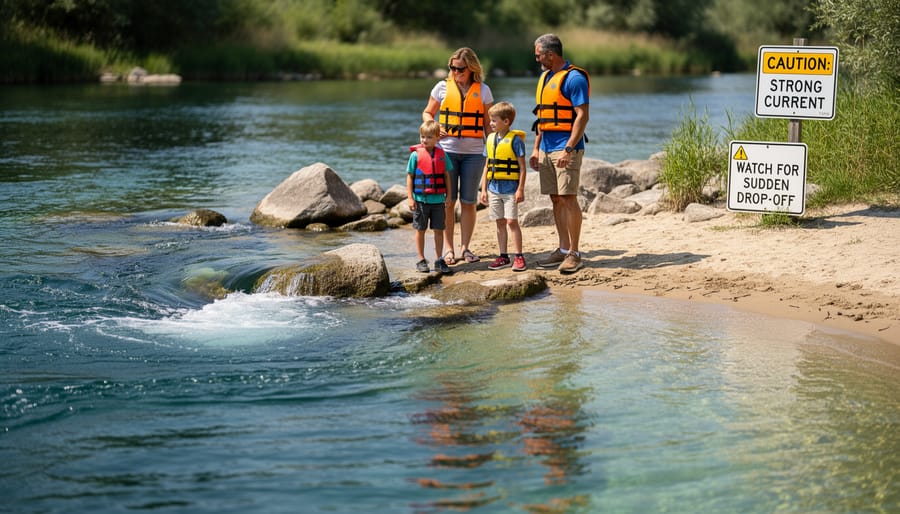
Pennsylvania’s rivers, lakes, and beaches present different hazards than controlled pool environments. Moving water, variable depths, changing weather, and natural obstacles require parents to adjust their supervision strategies and preparation.
Before heading to any natural water site in Pennsylvania, check current conditions. The Pennsylvania Department of Environmental Protection maintains real-time water quality data for popular swimming areas. High bacteria levels after heavy rain can cause illness even without swallowing water. Fast-moving currents following storms create drowning risk even for strong swimmers. If the water looks murky or smells unusual, choose a different location or activity.
Rivers and streams demand extra caution. What appears calm at the surface can hide strong undercurrents. Children should wear Coast Guard-approved life jackets in moving water regardless of swim ability. Establish clear boundaries, a specific sandbar or visible landmark, and prohibit anyone from going beyond that point. Submerged rocks, sudden drop-offs, and debris aren’t visible like pool edges.
Lake swimming requires awareness of depth changes and offshore winds that can push floaties away from shore faster than children can swim back. Designate a water watcher positioned to see the entire swimming area, not sitting among beach gear. The buddy system becomes critical when lifeguards aren’t present.
Sarah Martinez, an aquatic safety coordinator with the Lehigh Valley Conservation District, emphasizes sustainable water recreation: “Families protecting Pennsylvania’s waterways through ‘leave no trace’ practices, packing out trash, using reef-safe sunscreen, respecting wildlife habitats, are also creating safer environments. Cleaner water is safer water, and teaching children to care for these spaces builds both environmental stewardship and safety awareness.”
Wildlife encounters happen. Teach children to observe snapping turtles, water snakes, and geese from a distance. Never feed wildlife, which can create aggressive behavior and disrupt ecosystems. If jellyfish appear in Lake Erie, exit the water and seek a lifeguarded beach with current conditions posted.
Common Questions Parents Ask About Water Safety
Parents wrestling with water safety decisions often have similar urgent questions. Here are evidence-based answers to the concerns caregivers raise most frequently.
At what age can children swim unsupervised?
No child should swim completely unsupervised until they demonstrate strong swimming skills, sound judgment, and the maturity to recognize and respond to dangers, typically not before age 12, and often later depending on the individual child and environment. Even competent teenage swimmers benefit from the buddy system and adults nearby.
Are water wings or arm floaties safe?
Water wings are toys, not safety devices, and can give children and parents a false sense of security. They can deflate, slip off, or position a child vertically in the water rather than horizontally for swimming. Always use Coast Guard-approved life jackets instead.
How do I keep toddlers safe around decorative ponds or water features?
Install a fence at least four feet tall with a self-closing, self-latching gate around any decorative pond, or cover it with rigid mesh designed to support a child’s weight. Toddlers can drown in as little as two inches of water, so drain birdbaths and fountains when not supervised, and never rely on supervision alone as your primary barrier.
What is the safest type of home pool barrier?
A four-sided isolation fence that completely separates the pool from the house and yard, standing at least four feet high with vertical slats no more than four inches apart, equipped with a self-closing, self-latching gate that opens outward. This configuration has proven most effective at preventing unsupervised child access.
When should I start swim lessons for my baby?
The American Academy of Pediatrics recommends swim lessons can begin at age one for most children, though parent-child water acclimation classes can start earlier. Lessons reduce drowning risk but never make a child drown-proof, supervision remains essential regardless of swim ability.
Beyond these core questions, parents should know that creating water safety habits extends to everyday choices. When enjoying Pennsylvania’s natural water areas, reduce plastic use by bringing reusable water bottles and snack containers, preventing litter that endangers both children and aquatic wildlife.
Safety rules should evolve as your children grow. What worked for your three-year-old won’t fit your seven-year-old’s abilities and risks. Reassess your family’s water safety plan each season, involve children in age-appropriate safety discussions, and model the vigilant behavior you expect them to develop as they mature around water.
Water safety isn’t a one-time checklist you complete and forget. It’s a living practice that grows alongside your children, adapting as they gain skills, confidence, and independence around water. The toddler who needed arm’s-reach supervision last summer might be ready for visual monitoring this year, while your older child transitions from shallow play to deeper water activities. Revisit your safety protocols at the start of each swimming season, update your equipment as kids outgrow life jackets, and refresh everyone’s memory on rules and emergency procedures.
Staying educated matters. Drowning prevention research evolves, safety equipment improves, and local conditions change. Subscribe to updates from organizations like the American Red Cross or Safe Kids Pennsylvania. Talk with other parents about what works. Most importantly, maintain the habit of present, undistracted supervision, it remains your most powerful tool regardless of your child’s age or ability.
When you prioritize water safety, you’re not limiting your family’s enjoyment of Pennsylvania’s beautiful lakes, rivers, and pools. You’re enabling it. Informed, prepared parents can relax into the experience, knowing they’ve created layers of protection that let children explore, learn, and build memories safely. That sustainable approach to family safety, preventing harm rather than reacting to it, protects both the people you love and the natural environments where you make those memories together. Your commitment to vigilance today shapes a lifetime of confident, responsible water experiences for your family.