Is Plastic Bad for the Environment? (And How Plastic Pollution Really Works)
Yes, plastic is bad for the environment. This petroleum-based material persists for hundreds of years, breaks down into toxic fragments that contaminate ecosystems, and releases greenhouse gases throughout its lifecycle from production to disposal.
The evidence is clear and overwhelming. Since mass production began in the 1950s, humans have created over 9 billion tons of plastic, with only 9% ever recycled. The rest sits in landfills, floats in oceans, or has been burned, releasing harmful chemicals. Marine animals mistake plastic debris for food. Microplastics now appear in human blood, drinking water, and even Arctic ice. The manufacturing process alone accounts for roughly 3.4% of global greenhouse gas emissions, a figure projected to triple by 2050 if current trends continue.
But the plastic problem isn’t one-size-fits-all. Single-use plastics like shopping bags and straws cause immediate, visible harm, while durable plastics in medical devices and water infrastructure serve critical functions with longer lifespans. Understanding which types cause the most damage and why helps you make informed choices rather than feeling paralyzed by guilt.
This article breaks down exactly how plastic harms air, water, soil, and wildlife. You’ll learn which plastics pose the greatest risks, where the damage occurs across the supply chain, and what the latest 2026 research reveals about long-term environmental impacts. More importantly, you’ll discover practical steps that actually make a difference, turning concern into meaningful action without requiring perfection.
What Is Plastic and Why Does It Matter?
Plastic is a synthetic polymer, a chain-like molecule made up of repeating units, derived primarily from petroleum and natural gas. Unlike natural materials such as wood or cotton that form through biological processes, plastics are manufactured in chemical plants by heating and chemically altering fossil fuel components. This artificial origin gives plastics their distinctive properties: they’re lightweight, durable, moldable into virtually any shape, and resistant to water and decay.
When Belgian chemist Leo Baekeland invented Bakelite in 1907, he kicked off a materials revolution. Plastics could replace scarce natural resources like ivory and tortoiseshell. They made goods cheaper and more accessible. By the mid-20th century, plastics had transformed manufacturing, packaging, medicine, and daily life. A material that wouldn’t rot, wouldn’t rust, and cost pennies to produce seemed like pure progress.
- Polymer
- A large molecule composed of repeating structural units (monomers) linked together in a chain. In plastics, these chains can contain thousands of repeating units.
- Synthetic Material
- A substance manufactured through chemical processes rather than occurring naturally. Plastics are synthesized from petroleum or natural gas through industrial refinement.
- Petroleum-Based
- Derived from crude oil, the fossil fuel source for about 99% of plastics. Extracting and processing petroleum for plastic production depletes non-renewable resources and generates significant carbon emissions.
- Biodegradable vs Non-Biodegradable
- Biodegradable materials break down naturally through microbial action into harmless compounds. Most conventional plastics are non-biodegradable, they persist for centuries, fragmenting into smaller pieces rather than decomposing.
- Microplastics
- Plastic fragments smaller than 5 millimeters that result from larger plastics breaking down or are manufactured at tiny sizes. These particles infiltrate water, soil, and living organisms.
Here’s the problem: the same qualities that made plastics revolutionary, durability, resistance to breakdown, become liabilities when products are discarded. A plastic bottle that keeps your water fresh for months will outlast you by several centuries once you toss it away. The molecular bonds that make plastics so stable can’t be digested by most bacteria, fungi, or other decomposers that recycle organic materials back into ecosystems.
This matters because we now produce over 400 million tons of plastic annually, much of it designed for single use. We’ve created a material perfectly engineered to last forever, then built an economy that treats it as disposable. Understanding what plastic actually is, and why its chemistry makes it both miraculous and menacing, is the first step toward grasping the scale of the environmental challenge we face.
How Plastic Pollution Works: From Production to Environmental Impact
The Production Phase: Carbon Footprint and Resource Depletion
Manufacturing plastic begins with extracting crude oil or natural gas, energy-intensive processes that release significant carbon dioxide before a single plastic product exists. Refining these fossil fuels into the chemical building blocks of plastic, ethylene, propylene, and other monomers, requires extreme heat and pressure, consuming massive amounts of energy typically generated by burning more fossil fuels.
The numbers tell a stark story: producing just one kilogram of plastic emits roughly two kilograms of carbon dioxide. At global production levels exceeding 400 million tonnes annually, plastics drive greenhouse gases equivalent to nearly 600 coal-fired power plants operating year-round.
Beyond emissions, plastic production permanently removes finite petroleum resources from the ground. Approximately 8% of global oil production feeds plastic manufacturing, oil that could theoretically remain sequestered underground or power cleaner alternatives. As we extract and process these materials, we’re essentially mining ancient carbon stores and distributing them across the planet in forms that won’t decompose, locking environmental harm into both the production and disposal phases.
This front-end burden means plastic’s environmental cost begins accumulating before the material reaches consumers, contradicting the perception that pollution starts only when we discard products.
The Disposal Crisis: Where Plastic Goes After We’re Done
When you toss a plastic bottle into a bin, you’re participating in one of the most broken systems on the planet. Only about 9% of all plastic ever produced has been recycled. The rest? It sits in landfills, drifts through oceans, or gets burned, and none of these outcomes are good.
Most discarded plastic ends up in landfills, where it occupies space indefinitely without breaking down. Landfills in Pennsylvania and across the U.S. are filling faster than new ones can be permitted, creating a looming capacity crisis. Some municipalities ship their plastic waste thousands of miles to other states or countries rather than deal with it locally.
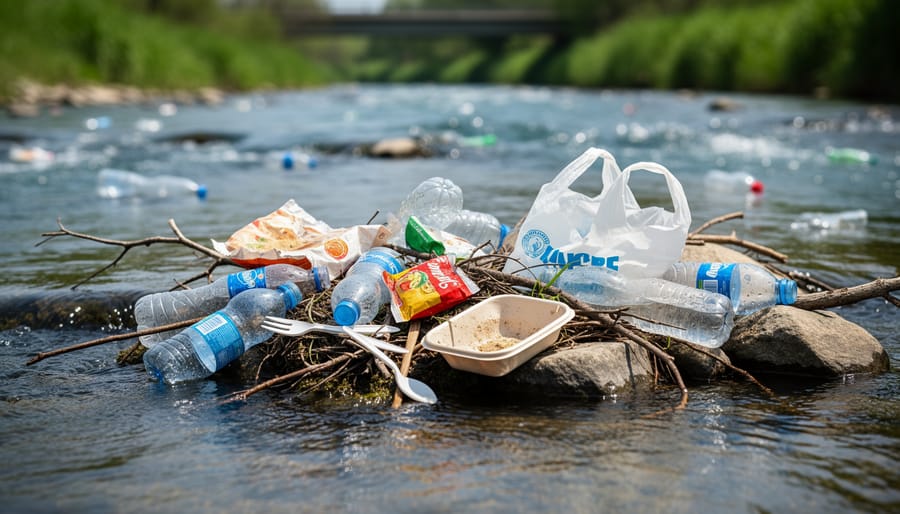
When plastic waste is mismanaged it escapes into waterways and eventually reaches oceans. An estimated eight million metric tons of plastic enter marine environments annually. Rivers like the Delaware carry discarded bottles, bags, and wrappers downstream, where they fragment but never disappear.
Incineration seems like a solution until you examine the consequences. Burning plastic releases toxic chemicals and greenhouse gases into the atmosphere. While waste-to-energy facilities claim to recover some value, they’re essentially converting solid pollution into air pollution.
The recycling system offers little relief. Contamination rates are high, sorting is expensive, and many plastics aren’t economically viable to recycle. Collection programs give us the illusion of responsible disposal while the majority of collected plastic still ends up in landfills or incinerators.
Current waste management wasn’t designed for the volume of plastic we produce. It’s failing spectacularly.
The Breakdown Problem: Why Plastic Never Really Goes Away
When you toss a plastic bottle in the trash, you might assume it will eventually decompose like an apple core or fallen leaves. It won’t. Plastic doesn’t biodegrade in any meaningful sense, instead, it fragments into progressively smaller pieces while the underlying polymer chains remain intact.
This breakdown happens through photodegradation and mechanical stress. Sunlight’s ultraviolet rays weaken the chemical bonds in plastic, making it brittle. Waves, wind, and physical abrasion then fracture these weakened pieces into microplastics (particles smaller than 5mm) and eventually nanoplastics (less than 100 nanometers). A single plastic bag can shatter into millions of microscopic fragments, each carrying the same synthetic polymer structure as the original.
These particles don’t disappear. Scientists estimate that common plastics like PET bottles and polyethylene bags persist for 450 to 1,000 years in the environment, though the actual timeframe remains uncertain since plastic has only existed for about a century. The fragments become so small they infiltrate soil, water systems, and living organisms, but they never break down into harmless natural elements. You’re essentially trading one large piece of pollution for countless invisible ones that spread further and prove nearly impossible to remove.
Types of Plastic and Their Environmental Impact
Single-Use Plastics: The Biggest Offenders
Single-use plastics earn their reputation as environmental villains because they combine maximum waste generation with minimum usage time. A plastic bag used for fifteen minutes can persist in the environment for centuries, and this absurd ratio defines the problem. These items account for roughly 40% of all plastic produced yet serve their purpose for hours or even seconds before disposal.
Plastic bottles illustrate the scale perfectly. Americans alone discard 35 billion plastic bottles annually, and fewer than 30% reach recycling facilities. The rest enter landfills or ecosystems where they fragment into microplastics that contaminate soil and water. Food packaging presents similar challenges, with multilayer films and combination materials that current recycling systems cannot process.
The environmental harm extends beyond volume. Single-use items travel farthest from disposal points, carried by wind and water into remote ecosystems. Plastic bags kill marine animals through ingestion and entanglement. Straws and stirrers concentrate in ocean gyres, while takeout containers clog waterways during storms. Their lightweight design, once celebrated as convenient, ensures they escape waste management systems and infiltrate natural environments where they cause lasting damage.
Durable Plastics: Long-Term Concerns
Durable plastics in furniture, electronics, and vehicles create a different environmental problem than their single-use cousins. These items can last decades, which sounds positive until you consider what happens at end-of-life.
When a plastic chair breaks or a computer becomes obsolete, most components end up in landfills where they’ll persist for centuries. Electronics contain particularly troublesome plastic blends mixed with metals and flame retardants that make recycling economically unviable. Vehicle interiors shed microplastic particles throughout their lifespan through friction and UV exposure, washing into stormwater systems during rain.
The sheer volume matters too. A single car contains roughly 50% plastic by volume. As these products accumulate in landfills, they represent enormous reserves of locked-in petroleum resources that could have been used more efficiently.
Repair culture offers one solution. Extending product lifespans through maintenance reduces the flow of durable plastics into waste streams. Some manufacturers now design for disassembly, making it easier to separate plastic components for recycling. Pennsylvania’s electronics recycling programs have diverted thousands of tons from landfills, though capacity remains limited compared to the volume of discarded devices.
Microplastics and Nanoplastics: The Invisible Threat
The plastic bottle you recycled last year didn’t disappear. It shattered into millions of microscopic fragments now drifting through the air you breathe and the water you drink.
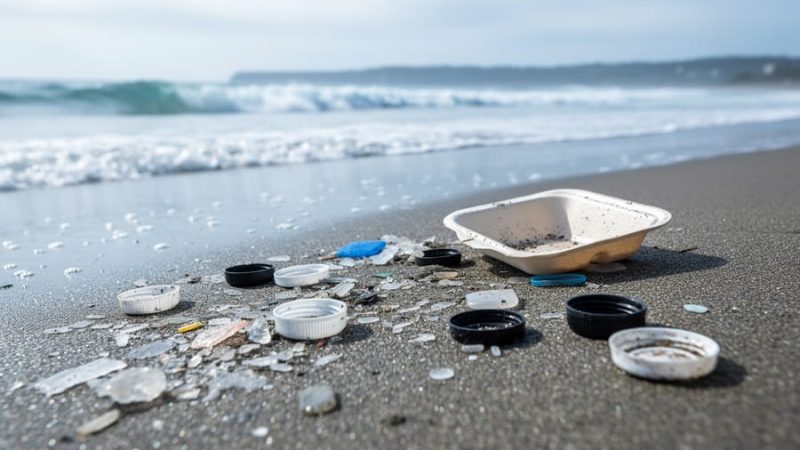
Microplastics are fragments smaller than five millimeters, about the size of a sesame seed. Nanoplastics are even tinier, measured in billionths of a meter, small enough to cross cell membranes. These particles form when larger plastics break down through sunlight exposure, wave action, and mechanical stress. A single plastic bag can generate thousands of microplastic particles as it deteriorates.
What makes them particularly insidious is their ability to penetrate everywhere. Researchers have found microplastics in Arctic snow, mountain springs, human blood, and placentas. They concentrate toxins from surrounding water, creating poisonous pills that marine animals mistake for food. Once ingested, these particles accumulate up the food chain.
A 2024 study detected microplastics in human lung tissue and major organs, though health impacts remain under investigation. The particles don’t biodegrade, they simply get smaller and more pervasive, creating a pollution problem that’s nearly impossible to clean up once dispersed.
Where Plastic Pollution Is Used (And Causes Harm)
Ocean and Marine Ecosystems
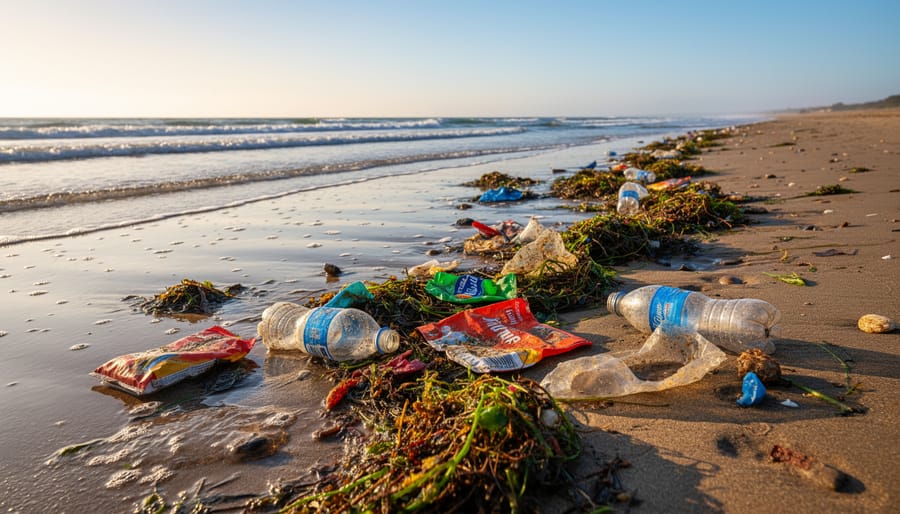
Ocean plastic enters marine environments through rivers, storm drains, and direct dumping, creating a cascade of devastating consequences. Approximately 8 million tons of plastic reach the ocean annually, where it persists for centuries.
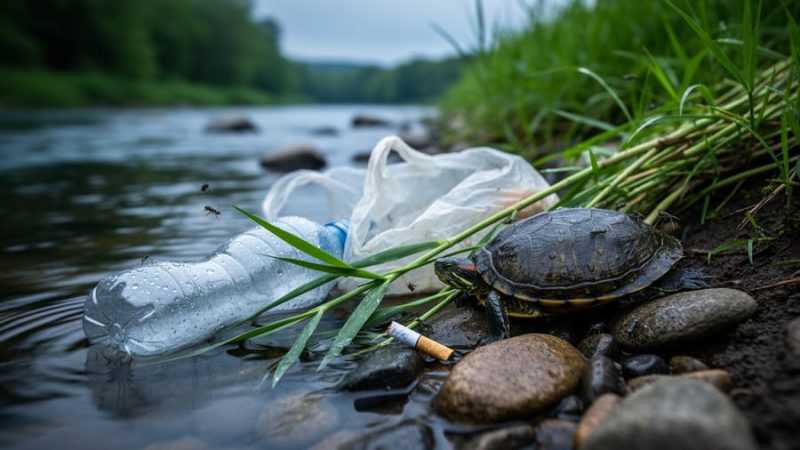
Entanglement poses an immediate threat. Sea turtles, seals, and seabirds become trapped in fishing nets, six-pack rings, and plastic bags. These animals often drown, starve, or suffer severe injuries as the debris cuts into their flesh. Whales have been found with hundreds of pounds of plastic rope wrapped around their bodies.
Ingestion proves equally deadly. Marine creatures mistake plastic fragments for food, sea turtles eat plastic bags thinking they’re jellyfish, while seabirds feed plastic pieces to their chicks. Once consumed, plastic blocks digestive systems, causing starvation even with full stomachs. Toxic chemicals leaching from ingested plastic accumulate in tissues, moving up the food chain to larger predators.
The problem extends beyond individual animals. Just as littering harms wildlife in terrestrial ecosystems, ocean plastic disrupts entire habitats. Plastic debris smothers coral reefs, blocking sunlight needed for photosynthesis. Microplastics alter sediment composition on the ocean floor, affecting organisms that filter feed or burrow.
Soil and Terrestrial Environments
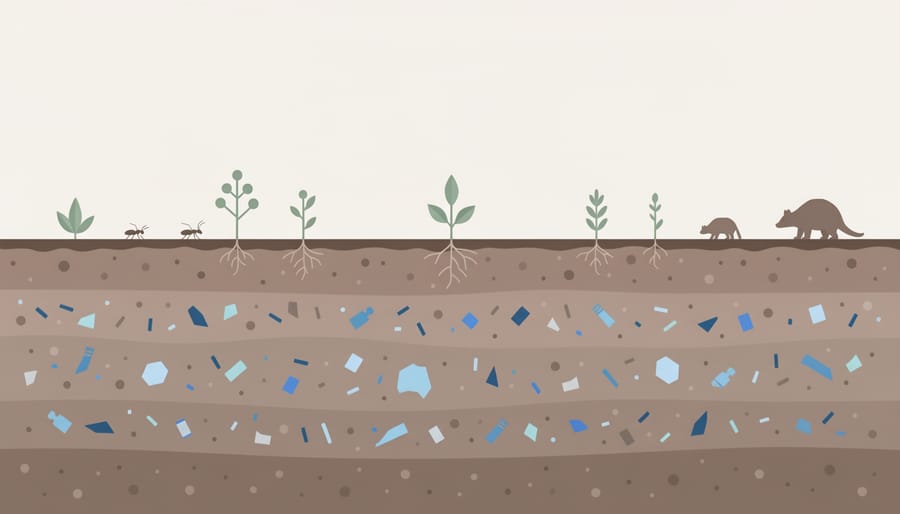
Plastic pollution isn’t confined to the ocean. Agricultural fields across Pennsylvania and beyond now contain measurable concentrations of microplastics from mulch films, irrigation systems, and contaminated compost made with food waste packaged in plastic. Studies show these particles alter soil structure, reducing its ability to retain water and support beneficial microorganisms that plants depend on.
In forests, discarded plastic fragments disrupt the natural decomposition cycle. Leaf litter mixed with plastic debris creates a barrier that prevents organic matter from breaking down properly, starving the soil of nutrients. Urban parks and gardens face similar problems, with plastic mulch and synthetic turf releasing particles that persist for generations.
The real concern is how these contaminants move through the food chain. Plants can absorb nanoplastics through their root systems, potentially transferring them into the vegetables we eat. Research from agricultural universities indicates that earthworms ingest soil microplastics, which then affects their reproduction and ability to aerate the ground. The cumulative effect degrades soil fertility over time, threatening long-term agricultural productivity and ecosystem health.
Human Health: When Pollution Comes Home
Microplastics don’t stay in rivers and oceans, they’re infiltrating our bodies. Recent studies have detected these tiny particles in human blood, lungs, and even placentas, raising urgent questions about long-term health effects. We consume an estimated credit card’s worth of plastic weekly through drinking water and food, particularly seafood and salt. Early research links microplastic exposure to inflammation, hormonal disruption, and potential cellular damage. The same damage to waterways that harms fish and wildlife creates a direct pathway into our kitchens and bodies. While scientists are still mapping the full health implications, the presence of synthetic polymers in human tissue marks an unprecedented experiment we didn’t consent to join.
Real-World Impact: Pennsylvania’s Plastic Pollution Challenge
Pennsylvania’s waterways tell a stark story about plastic pollution’s local impact. The Delaware River, which provides drinking water for 15 million people, and the Susquehanna River, the Chesapeake Bay’s largest tributary, both face significant plastic contamination. A 2023 cleanup along the Schuylkill River removed over 12,000 plastic bottles in a single day, while monitoring stations have detected microplastics in 85% of water samples taken from major Pennsylvania rivers.
The pollution sources reflect both urban and rural challenges. Philadelphia generates approximately 500,000 tons of plastic waste annually, with roughly 20% escaping proper disposal channels and ending up in storm drains that feed directly into the Delaware. Agricultural areas contribute differently, plastic mulch films and irrigation tubing fragment in fields, washing into tributaries during heavy rains. Combined sewer overflows in older cities like Pittsburgh and Harrisburg dump raw sewage mixed with plastic debris into rivers during storms, creating concentrated pollution events.
Community response has been impressive despite these challenges. The Alliance for the Chesapeake Bay coordinates regular cleanups that removed 47 tons of trash, predominantly plastic, from Pennsylvania waterways in 2025. Local organizations work on what Pennsylvania can do through legislation, including proposed bans on single-use bags in multiple counties. These efforts directly address the real damage from litter affecting osprey, river otters, and other wildlife that mistake plastic for food or become entangled in discarded fishing line and six-pack rings.
The state’s experience mirrors global patterns: plastic pollution respects no boundaries, accumulating wherever water flows.
The Bottom Line: Is Plastic Bad for the Environment?
Yes, plastic is bad for the environment, but the full answer requires nuance.
The evidence is clear and damning. Plastic production depletes fossil fuels and generates greenhouse gases. It persists for centuries, breaks into microplastics that infiltrate every ecosystem, and harms wildlife through ingestion and entanglement. Ocean garbage patches, contaminated soil, and plastic traces in human blood all confirm the severity of this crisis.
However, not all plastic carries equal blame. Durable plastics in medical devices, clean water infrastructure, and renewable energy components serve essential functions that currently lack viable alternatives. The real villains are single-use plastics: the bottles, bags, and packaging we use once and discard, creating most of the environmental damage we’ve explored.
The scale of harm depends on how we produce, use, and dispose of plastic. A reusable water bottle used for five years causes exponentially less damage than 1,825 disposable bottles consumed in that same period. Context matters.
This distinction doesn’t diminish the urgency. Even with necessary applications acknowledged, plastic pollution remains one of our most pressing environmental challenges. The question isn’t whether plastic harms the environment, it does, but how quickly we can implement plastic pollution solutions that prioritize reduction, improve disposal systems, and transition to sustainable alternatives where feasible.
What You Can Do: Practical Steps to Reduce Plastic Impact
You don’t need to overhaul your entire life overnight to make a meaningful difference. Start with the easiest swaps that fit your routine: carry a reusable water bottle, keep cloth bags in your car, and choose products with minimal packaging when possible. These simple changes eliminate hundreds of single-use items from your personal waste stream each year.
Focus on proper disposal when plastic use is unavoidable. Rinse containers before recycling, check your local facility’s accepted materials list (many don’t take items you might assume are recyclable), and never bag recyclables together, loose items sort better at processing centers. Understanding what actually gets recycled in your area prevents well-intentioned contamination that sends entire batches to landfills.
Support businesses and brands committed to reducing plastic footprints. Companies respond to consumer demand, so your purchasing choices send powerful signals. Look for products in glass, metal, or paper packaging, and consider buying in bulk to reduce wrapper waste. When plastic packaging is the only option, choose larger quantities to minimize total packaging per unit.
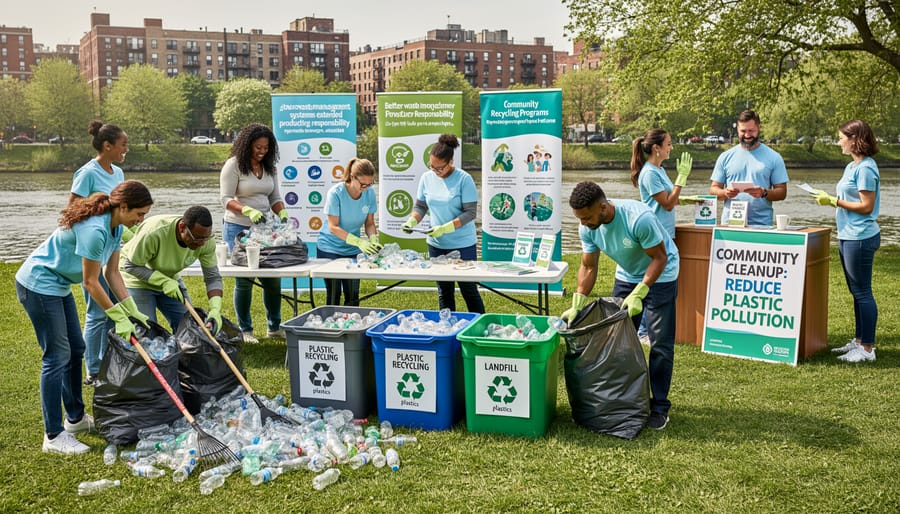
Amplify your impact through community action and advocacy. Join local cleanup efforts along Pennsylvania waterways, these initiatives both remove existing pollution and raise awareness. Contact your state representatives to support legislation that holds producers accountable for packaging waste and invests in better recycling infrastructure. Pennsylvania’s policies can serve as models for other states.
The most effective approach combines personal responsibility with systemic pressure. Your individual actions reduce plastic pollution directly while demonstrating demand for broader change. Every reusable container you carry and every advocacy call you make contributes to shifting both markets and policies toward genuinely sustainable alternatives. Progress requires participation at all levels, and yours matters.
Common Questions About Plastic and Environmental Harm
People searching for information about plastic pollution often have similar questions that deserve clear, evidence-based answers. These common concerns reflect both genuine confusion and prevalent myths about plastic’s environmental impact.
Can plastic ever fully decompose?
No, conventional plastic doesn’t biodegrade in any meaningful timeframe. It breaks down into smaller and smaller pieces, microplastics and eventually nanoplastics, but the polymer chains remain intact for centuries, essentially becoming permanent environmental contamination rather than returning to natural elements.
Is recycling actually effective for plastic?
Only partially. While recycling is better than landfilling, only about 9% of all plastic ever produced has been recycled, and most plastic can only be downcycled once or twice before it becomes unusable. The process itself requires significant energy, and contamination issues mean much of what we put in recycling bins still ends up in landfills.
Are bioplastics really better for the environment?
It depends on the specific material and disposal method. Some bioplastics still require industrial composting facilities to break down and won’t degrade in landfills or oceans. Others are bio-based but not biodegradable. They can reduce fossil fuel dependence but aren’t automatically a solution to pollution problems.
Will ocean plastic cleanup projects solve the problem?
Cleanup efforts help but can’t solve the crisis alone since we’re adding plastic to oceans faster than we can remove it. The real solution requires stopping plastic pollution at its source through reduced production, better waste management systems, and preventing plastic from entering waterways in the first place.
Another frequent question concerns whether plastic is actually worse than alternatives like paper or glass. The answer isn’t straightforward, it depends on the specific use case and what environmental factors you prioritize. Paper production requires significant water and energy, while glass is heavy, increasing transportation emissions. Plastic’s lightness and durability make it superior for some applications, but its persistence in the environment and fossil fuel origins create problems that biodegradable materials don’t.
The confusion surrounding these questions isn’t accidental. Decades of industry messaging have muddied public understanding, promoting recycling as a complete solution while downplaying production’s role in the crisis. Understanding the nuances helps you make informed decisions rather than falling for oversimplified narratives that either demonize all plastic or dismiss legitimate concerns about its environmental impact.
Types or components
The environmental impact of plastic depends largely on its chemical composition and intended use. Understanding the main categories helps clarify why some plastics cause more harm than others.
Thermoplastics can be melted and reshaped repeatedly, making them theoretically recyclable. This group includes PET (water bottles), HDPE (milk jugs), and PVC (pipes). While their recyclability sounds promising, only a fraction actually gets recycled due to contamination and economic factors.
Thermosets form permanent chemical bonds when heated and cannot be remelted. Once manufactured into products like epoxy resins or polyurethane foam, they’re essentially locked in that form. This permanence makes them particularly problematic in landfills where they’ll persist unchanged for centuries.
Elastomers like synthetic rubber fall between these categories, offering flexibility but resisting recycling. They’re common in tires, which create massive waste streams worldwide.
Bioplastics derived from plant materials represent a newer category. While marketed as eco-friendly alternatives, many still require industrial composting facilities to break down and won’t degrade in typical environments. Their “bio” prefix doesn’t automatically make them environmentally benign.
The evidence is clear: plastic poses serious environmental harm at every stage of its lifecycle. From fossil fuel extraction and carbon-intensive production through centuries of persistence in ecosystems, plastic pollution demands our attention and action. But this reality shouldn’t leave you feeling paralyzed or hopeless.
Here’s what makes this moment different from past environmental challenges: we have unprecedented awareness, proven alternatives, and growing momentum for systemic change. Communities across Pennsylvania and beyond are successfully reducing plastic waste through policy changes, innovative recycling programs, and grassroots initiatives. Businesses are responding to consumer demand for sustainable packaging. Scientists are developing materials that could replace petroleum-based plastics.
Your choices matter more than you might think. When you refuse single-use plastics, support companies with strong environmental commitments, and advocate for better waste management systems, you’re part of a larger shift that’s already underway. Each reusable bag, water bottle, and container represents both a personal victory and a signal to manufacturers and policymakers that change is necessary.
The question isn’t whether plastic is bad for the environment, it clearly is. The real question is what we’ll do about it. Start with the practical steps outlined in this article. Talk with friends and family about what you’ve learned. Support local and national policies that address plastic pollution at its source.
We created this problem, which means we can solve it. That work starts now, with informed action and realistic optimism about what’s possible when individual choices combine with collective will.