How Does Littering Affect the Environment: Real Damage to Pennsylvania’s Wildlife and Waterways
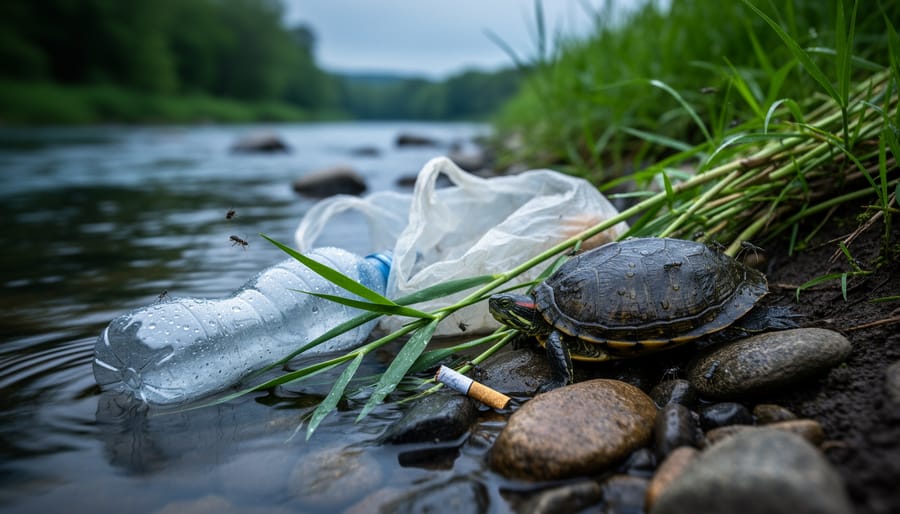
A single plastic bottle tossed from a car window in Pittsburgh can end up in the Chesapeake Bay within weeks, joining the estimated 1.2 million pounds of trash that Pennsylvania waterways carry toward the ocean each year. This isn’t just an aesthetic problem. When we discard waste improperly, we set off a chain reaction that damages ecosystems, poisons wildlife, and ultimately circles back to affect human health.
Pennsylvania provides a telling case study. The state’s Department of Environmental Protection reported in 2025 that litter cleanup costs taxpayers over $14 million annually, yet this figure captures only a fraction of the true environmental toll. Every discarded cigarette butt leaches toxic chemicals into soil for up to a decade. Plastic bags strangle waterways and are mistaken for food by countless animals. Even seemingly harmless items like apple cores create problems when discarded in non-native environments, introducing seeds that disrupt local plant communities.
The consequences ripple outward in ways most people never see. Marine biologist Dr. Sarah Chen from Penn State’s Behrend campus has documented how microplastics from degraded litter now appear in 89% of Pennsylvania stream samples, working their way up the food chain from insects to fish to the humans who eat them. Meanwhile, volunteers with the Schuylkill River Greenways removed 47 tons of trash from riverbanks in 2025 alone, much of it preventable single-use items.
Understanding how litter damages our environment is the first step toward meaningful change. The problem isn’t insurmountable, but it requires recognizing that every piece of waste we generate has a destination, and when that destination is a roadside, stream, or forest floor, the costs compound in ways that affect us all.
The Scale of Pennsylvania’s Litter Problem
Pennsylvania faces a litter crisis that carries measurable environmental and economic consequences. According to a comprehensive study conducted by the Department of Environmental Protection (DEP) and PennDOT in partnership with Keep Pennsylvania Beautiful during 2018-2019, there are over 500 million pieces of litter scattered along the state’s roadways alone. That number translates to approximately 502.5 million individual items cluttering highways, rural routes, and suburban streets across the Commonwealth.
The financial burden tells another part of the story. Nine Pennsylvania cities collectively spend more than $68.5 million annually on litter-related efforts, including prevention programs, public education campaigns, cleanup and abatement activities, and enforcement measures. This figure doesn’t account for countless municipalities and townships with their own cleanup budgets, meaning the true statewide cost runs significantly higher.
Public awareness of the problem is remarkably high. The same DEP-PennDOT-Keep Pennsylvania Beautiful research found that over 90 percent of respondents identified litter as a genuine problem in Pennsylvania, with concerns centered on environmental damage and declining property values. This widespread recognition creates a puzzling gap between awareness and action.
If nine out of ten residents acknowledge litter as harmful, why does the problem persist? The answer lies partly in diffusion of responsibility. Many people recognize litter as an issue yet don’t connect their individual actions, like tossing a cigarette butt or failing to secure truck loads, to the larger crisis. The study identified the top three sources of roadside litter as uncovered trucks, drivers, and pedestrians, suggesting that much of Pennsylvania’s litter problem stems from preventable human behavior rather than systemic infrastructure failures. Bridging the gap between concern and behavior change remains central to addressing Pennsylvania’s litter challenge.
How Litter Damages Pennsylvania’s Waterways
The Plastic Problem in Pennsylvania Waters
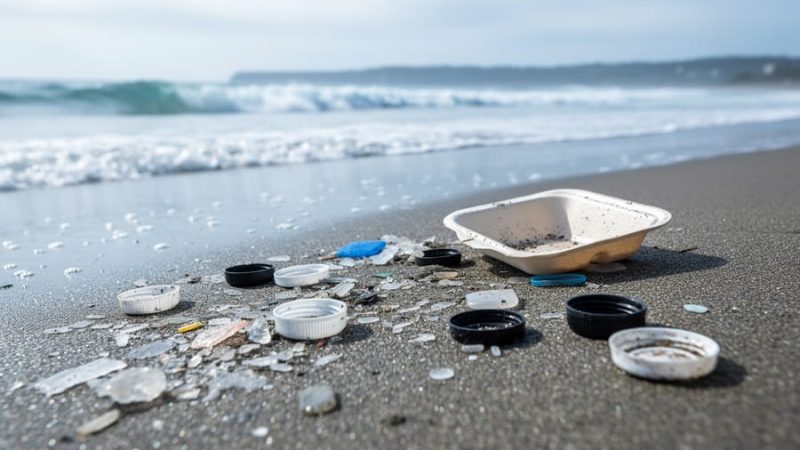
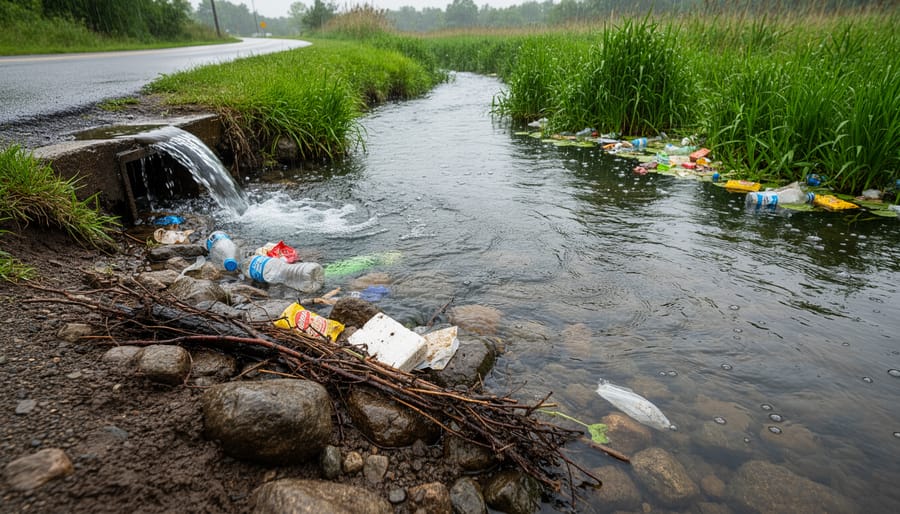
Plastic waste dominates Pennsylvania’s litter stream, and its behavior in water systems makes it particularly destructive. Unlike organic materials, plastics don’t truly decompose. Instead, single-use bottles, bags, and packaging fragments break down into progressively smaller pieces through exposure to sunlight, wave action, and temperature fluctuations. This process creates microplastics, particles smaller than five millimeters, that persist in Pennsylvania’s rivers, streams, and lakes for decades or even centuries.
Once in aquatic environments, these microplastics become nearly impossible to remove. They absorb toxic chemicals from surrounding water, act as vectors for pollutants, and enter the food chain when fish and other organisms mistake them for food. Cigarette filters, which contain plastic fibers, illustrate this persistence problem: they take roughly five years to break down while continuously leaching nicotine and heavy metals into the water.
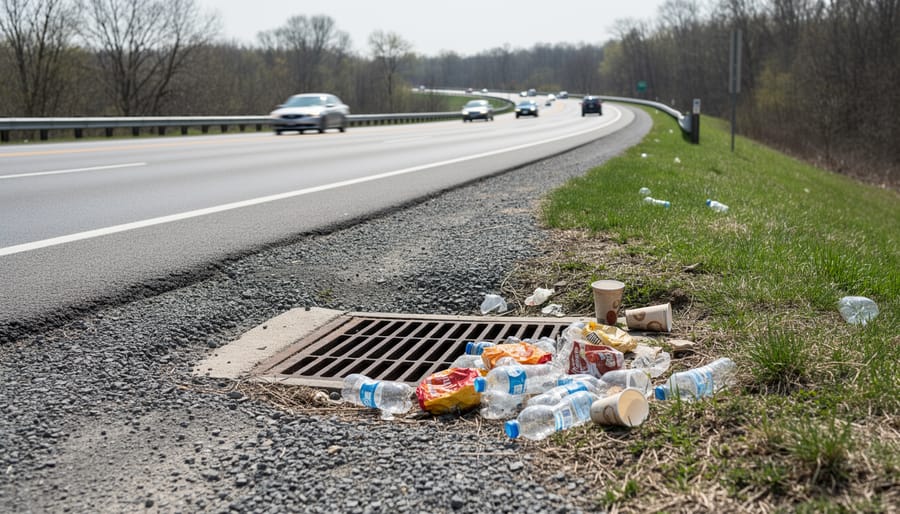
Pennsylvania’s interconnected watershed system means plastic litter dropped on a Philadelphia street or a rural roadway in Centre County can eventually reach the Chesapeake Bay or Lake Erie. Stormwater runoff carries these fragments into tributary streams, which feed larger rivers. The plastic problem compounds over time as each year’s litter adds to the existing load already circulating through waterways, creating accumulation zones where plastic debris concentrates and threatens both aquatic life and the humans who depend on these water sources.
Wildlife Impacts: When Trash Becomes a Threat
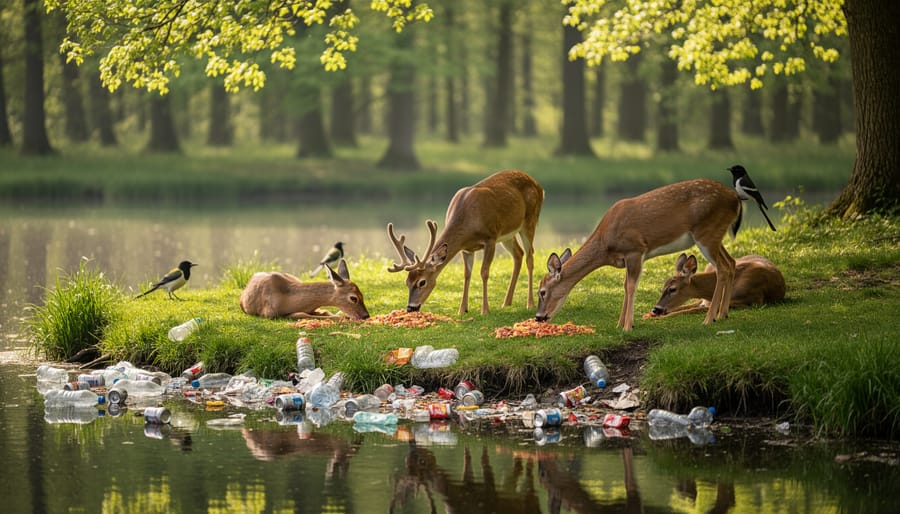
Litter transforms Pennsylvania’s natural spaces into hazard zones for native wildlife. Birds mistake bright plastic fragments for food, feeding them to their young. Fish ingest microplastics that have broken down in streams. Deer and other mammals become entangled in discarded fishing line and plastic bags, suffering injuries that can prove fatal.
Consider the seemingly insignificant cigarette butt. Cigarette butts contain heavy metals and leach nicotine into soil and water as they break down over roughly five years. A single butt discarded near a stream can contaminate up to eight liters of water, creating a toxic environment for aquatic insects, amphibians, and the fish that depend on them. When waterfowl or songbirds pick up these toxic filters for nesting material or mistake them for food, the consequences ripple through Pennsylvania’s ecosystems.
Wildlife cannot distinguish between food and trash, making even small items like bottle caps or food wrappers potentially lethal when ingested by animals already stressed by habitat loss.
Aquatic species face particular danger from plastic pollution in PA waterways. Turtles consume plastic bags, mistaking them for jellyfish. Fish swallow bottle caps and straws, which block their digestive systems and cause starvation. Microplastics accumulate in the tissues of smaller fish, concentrating toxins that move up the food chain to herons, ospreys, and eagles.
Mammals suffer from entanglement and ingestion alike. Plastic six-pack rings strangle waterfowl and small mammals. Raccoons and opossums root through roadside trash, consuming contaminated food scraps and plastic wrappers that obstruct their intestines. White-tailed deer have been found dead with stomachs full of plastic bags and packaging material.
The destruction extends beyond individual animals. Trash accumulation degrades habitat quality, driving sensitive species away from polluted areas. Ground-nesting birds abandon sites littered with debris. Fish avoid spawning in contaminated shallows. The cumulative effect weakens Pennsylvania’s biodiversity, undermining the complex relationships that sustain healthy ecosystems across the state.
The Hidden Environmental Consequences
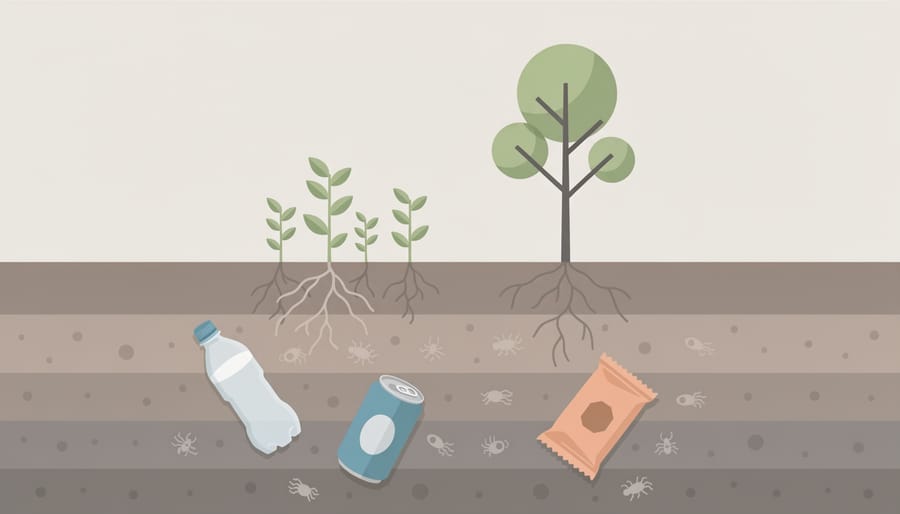
Beyond the visible blight, litter sets off a cascade of environmental damage that persists long after the trash disappears from view. When debris breaks down in Pennsylvania’s soils, it releases chemicals that alter soil chemistry and harm microorganisms essential for nutrient cycling. Items like cigarettes and the environment illustrate this hidden threat: filters leach nicotine and heavy metals into the ground for years, creating toxic zones where beneficial organisms struggle to survive.
This contamination disrupts the natural decomposition processes that keep Pennsylvania ecosystems healthy. Organic matter that would normally break down and enrich the soil instead competes with synthetic materials that shed microplastics and chemical residues. The result is degraded soil that supports fewer native plants and creates openings for invasive species. Non-native plants often colonize litter-disturbed areas because they tolerate degraded conditions better than native flora. Once established, these invaders outcompete the plants that Pennsylvania wildlife depends on for food and shelter.
Litter also triggers a behavioral cycle that compounds the problem. Research consistently shows that people are more likely to litter in areas already marred by trash, a phenomenon known as the broken windows effect. When roadsides, parks, and trails accumulate debris, passersby interpret the space as neglected and feel less personal responsibility to dispose of waste properly. This creates a self-reinforcing loop where each piece of litter makes the next more likely.
The combination of soil degradation, ecosystem disruption, and behavioral reinforcement means that litter’s environmental toll extends far beyond the items themselves. These hidden consequences undermine Pennsylvania’s natural systems in ways that take years to reverse, even after cleanup efforts remove visible trash.
Where Pennsylvania’s Litter Comes From
Understanding the specific sources of litter helps target reduction efforts where they’ll have the most impact. The 2018-2019 research study conducted by DEP, PennDOT, and Keep Pennsylvania Beautiful identified three primary culprits responsible for Pennsylvania’s roadside debris.
Uncovered trucks lead the list. When drivers haul loads without proper tarps or covers, items blow out during transport and scatter across highways and adjacent areas. Construction debris, yard waste, and loose materials from pickup truck beds account for a substantial portion of roadside trash. This source is particularly problematic because a single uncovered load can deposit litter across miles of roadway.
| Litter Source | Primary Contribution | Common Items |
|---|---|---|
| Uncovered Trucks | Construction and hauling debris | Building materials, yard waste, loose cargo |
| Drivers | Intentional and accidental disposal | Food wrappers, cigarette butts, beverage containers |
| Pedestrians | Street-level littering | Snack packaging, drink bottles, cigarette butts |
Drivers represent the second major source through both deliberate littering and accidental loss. Tossing cigarette butts, fast food packaging, and drink containers from vehicle windows remains common despite being illegal. The ease of disposing items through a car window, combined with the mistaken belief that small items don’t matter, perpetuates this behavior.
Pedestrians round out the top three. In urban areas, neighborhoods, and parks, people drop wrappers, bottles, and other waste rather than carrying it to proper receptacles. This street-level littering directly impacts Pennsylvania’s neighborhoods, parks, streams and rivers, and countryside areas mentioned in state research.
Each source contributes to soil and water contamination as discarded materials break down and leach toxins into the environment. Targeting these three sources through enforcement, education, and infrastructure improvements offers the most effective path toward reducing the 500 million pieces of litter currently plaguing Pennsylvania’s roadways.
Local Mitigation Strategies That Work
Case Study: Presque Isle Bay Litter Prevention
Presque Isle Bay and Lake Erie face constant pressure from litter entering the water through stormwater runoff, recreational activities, and wind-carried debris. Local organizations have implemented a multi-layered prevention model that combines education, infrastructure improvements, and community mobilization. One key tactic involves installing specialized litter traps at stormwater outfalls before they discharge into the bay, physically capturing plastics and other debris before they reach the water.
The program also emphasizes source reduction by working with marinas, beaches, and parks to provide clearly marked recycling stations that help visitors safely throw away plastic wrapping, bottles, and food containers. Signage educates beachgoers about how litter travels from shore into aquatic ecosystems, creating tangible connections between individual actions and water quality.
Volunteer cleanup events complement these infrastructure efforts, removing accumulated debris while generating local media coverage that reinforces anti-littering norms. The Presque Isle model demonstrates that combining physical barriers, convenient disposal options, targeted education, and community engagement creates measurable reductions in waterway contamination. Other Pennsylvania communities have adapted these layered strategies to their own rivers and streams, proving that localized approaches addressing specific littering pathways yield better results than generic awareness campaigns alone.
Pennsylvania’s litter crisis reveals something crucial: environmental damage doesn’t happen in isolation. The 500 million pieces of trash on our roadways don’t just sit there. They leach toxins into soil, break down into microplastics in our streams, and directly threaten the wildlife sharing our ecosystems. But here’s the encouraging truth: the interconnected nature of these problems also means our solutions create ripple effects. When you pick up litter before it reaches a storm drain, you’re protecting waterways, wildlife, and drinking water sources all at once.
The Commonwealth’s investment in research and actionable strategies through the Litter Action Plan shows that meaningful change is underway. Communities across Pennsylvania are proving that coordinated efforts work. You don’t need to wait for large-scale policy shifts to make a difference. Every choice to lower your environmental impact contributes to healthier ecosystems, whether that means securing loads in your vehicle, participating in local cleanups, or supporting Keep Pennsylvania Beautiful programs.
Understanding how littering affects the environment is the first step. Taking responsibility for our shared spaces is the next. Pennsylvania’s waterways, forests, and wildlife need advocates, and that starts with each of us recognizing our role in the solution.