How Do Pesticides Affect The Environment? The Truth About Soil, Water, and Wildlife
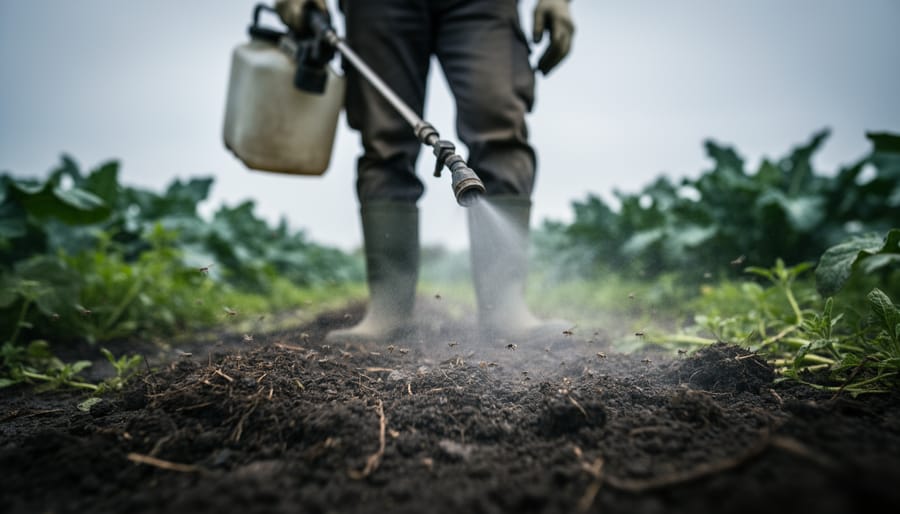
Every time a crop duster flies overhead or a homeowner sprays their lawn, millions of chemical molecules begin a journey far beyond their intended target. Pesticides designed to kill insects, weeds, and fungi don’t simply disappear after doing their job. They seep into groundwater, accumulate in soil, and drift on the wind to places miles away from where they were first applied.
The environmental cost of our chemical dependence is staggering. In 2025, researchers documented pesticide residues in 90% of U.S. waterways tested, with compounds like neonicotinoids showing up in concentrations harmful to aquatic life. These chemicals don’t just affect pests. They reshape entire ecosystems by eliminating beneficial insects, disrupting soil microbiomes that plants depend on, and poisoning the food sources of birds and mammals higher up the food chain.
Understanding how pesticides harm the environment isn’t just an academic exercise. It’s essential knowledge for anyone who wants to make informed choices about the products they use, the food they buy, and the policies they support. The mechanism of damage operates through three main pathways: contamination of water systems through runoff and leaching, degradation of soil health through the destruction of essential organisms, and loss of biodiversity as non-target species suffer unintended exposure.
Right here in Pennsylvania, communities are witnessing these impacts firsthand. Streams that once teemed with mayflies now run silent. Farms that relied on wild pollinators are seeing declining yields. But the story doesn’t end with problems. Farmers, researchers, and everyday citizens are pioneering alternatives that prove we can grow food and manage landscapes without poisoning the systems that sustain us all. This article breaks down exactly how pesticides move through the environment and what happens when they get there.
The Hidden Life in Your Soil, And How Pesticides Destroy It
When Beneficial Microbes Disappear
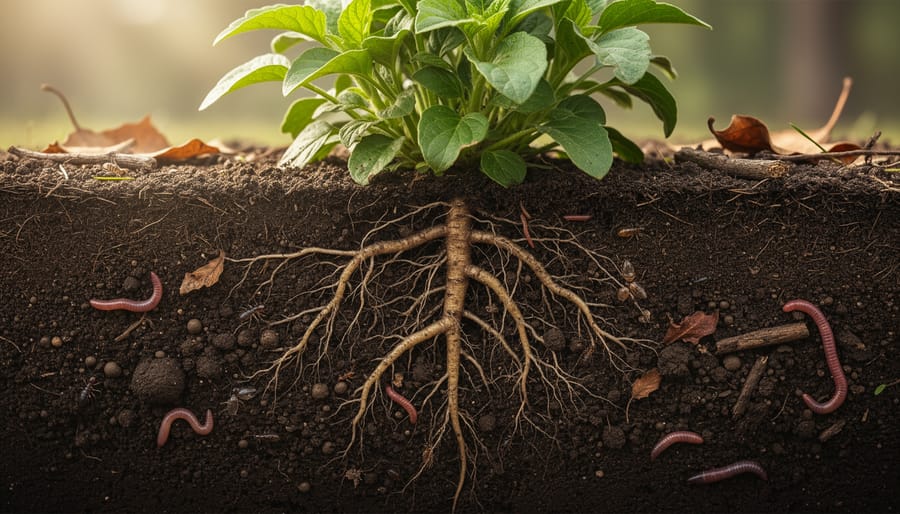
Soil teems with invisible workers. Every teaspoon holds billions of bacteria and fungi that break down organic matter, fix nitrogen, and shuttle nutrients into plant roots. When pesticides enter this underground ecosystem, they don’t discriminate between targets and allies.
Fungicides designed to stop crop diseases also wipe out mycorrhizal fungi that expand root systems by up to 1,000 times their natural reach. Without these fungal partners, plants struggle to access phosphorus and water even in fertile ground. Herbicides eliminate the bacteria that convert atmospheric nitrogen into forms plants can use, forcing farmers to apply more synthetic fertilizer the following season.
Recent studies confirm pesticides reduce soil diversity across multiple microbial groups, not just the pest species they target. A single insecticide application can cut beneficial nematode populations by half within weeks. These microscopic worms prey on plant-damaging pests and aerate soil as they move, creating channels for water and air. Their absence compounds over time.
The damage persists long after the active ingredient breaks down. Soil communities that took decades to establish can collapse in a growing season, leaving behind sterile dirt that grows crops only through constant chemical inputs. This dependency loop explains why conventional agriculture now relies on ever-increasing pesticide volumes to maintain yields.
The Fertility Crisis Below Ground
When soil microbes die off from pesticide exposure, they take the farm’s underground factory with them. These microscopic workers transform nitrogen, phosphate, and organic matter into nutrients plants can actually use. Without them, soil becomes little more than sterile dirt requiring ever-increasing fertilizer inputs to grow anything at all.
The economic consequences surface quickly. Farmers compensate for declining natural fertility by purchasing synthetic fertilizers, creating a costly cycle of chemical dependency. Research documented in 2026 confirms that pesticide residues in soil disrupt these fundamental ecosystem functions, essentially sabotaging the free services nature provides. A thriving soil ecosystem recycles nutrients efficiently; a damaged one forces growers to pay for what healthy microbes once delivered automatically.
This fertility decline cascades through the entire food web below ground. Earthworms, which rely on microbial decomposition to break down organic matter, find less food. Their populations drop, meaning less soil aeration and fewer tunnels for water infiltration. Mycorrhizal fungi that extend root systems and improve drought tolerance get knocked back by fungicide drift. The interconnected system unravels piece by piece.
The long-term impact on ecosystem functioning extends beyond individual fields. Studies show significant detrimental non-target effects on soil biodiversity that persist for years after application. Degraded soil holds less water during droughts and sheds more runoff during storms, worsening erosion and downstream pollution. What began as a targeted pest control measure ends up fundamentally altering the ground’s ability to support life, plant, animal, and human. The hidden cost shows up in yield declines, water quality problems, and landscapes that require constant intervention to produce what they once grew naturally.
From Field to Faucet: How Pesticides Contaminate Our Water
The Oxygen Thieves in Our Waterways
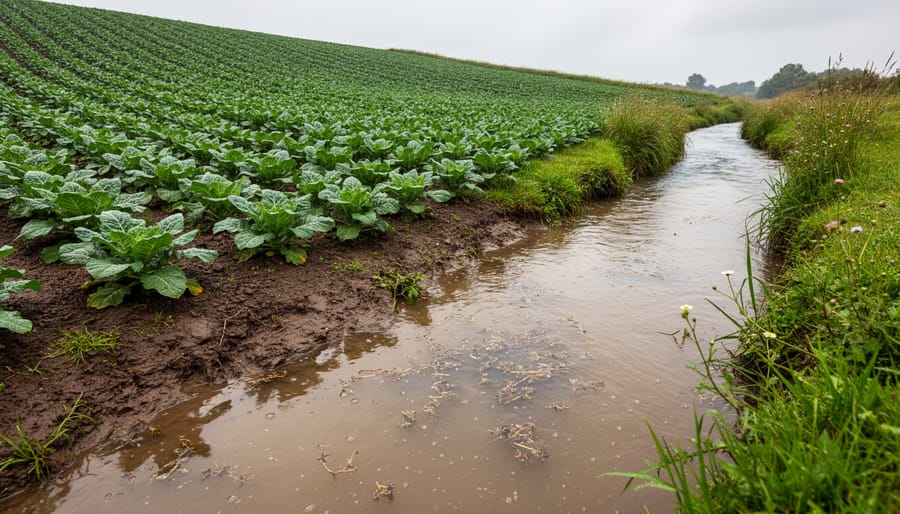
When herbicides enter streams, ponds, and lakes, they trigger a lethal chain reaction that most people never see coming. The chemicals target aquatic vegetation the same way they attack weeds on land. Within days of application, underwater plants begin to die and decompose. As bacteria break down this sudden influx of dead plant matter, they consume massive amounts of dissolved oxygen. Fish and other aquatic organisms literally suffocate in water that can no longer support them.
This process becomes particularly deadly in warm weather. Higher temperatures already reduce water’s oxygen-carrying capacity. Add a herbicide-driven plant die-off, and oxygen levels plummet below survivable thresholds. In agricultural areas where herbicides lower oxygen in water bodies through runoff, you’ll often find fish kills following heavy rainfall that washes chemicals from treated fields.
The damage extends beyond individual fish deaths. Aquatic plants serve as nurseries for young fish, filter water naturally, and stabilize sediment. When herbicides eliminate them suddenly, entire aquatic food webs collapse. Insects that feed on aquatic vegetation disappear, taking with them the food source for frogs, turtles, and birds. The stream or pond transforms from a thriving ecosystem into what researchers call a biological desert.
This oxygen depletion cycle can repeat with each herbicide application season, preventing aquatic ecosystems from recovering between impacts.
Drinking Water at Risk
Pesticide residues do not stay where they are sprayed. They travel through soil layers, seep into aquifers, and wash into the rivers and reservoirs we depend on for drinking water. Recent monitoring confirms that pesticides contaminate drinking water sources across agricultural regions, moving from cropland into groundwater and surface water systems that supply municipal taps.
The implications extend beyond detection thresholds. Chronic low-level exposure to pesticide residues in drinking water poses risks that accumulate over time, particularly for children, pregnant women, and communities near intensive farming areas. Wildlife faces even greater vulnerability. Amphibians, which absorb water directly through their skin, show heightened sensitivity to pesticide contamination. Fish embryos and aquatic invertebrates that filter large volumes of water concentrate residues in their tissues, disrupting reproduction and development.
Treatment plants can reduce some pesticide compounds, but not all. Older water systems and rural wells often lack advanced filtration, leaving residents exposed. The problem intensifies during spring runoff when application rates peak and rain carries concentrated loads into waterways. Even at levels considered safe by regulatory standards, mixtures of multiple pesticide compounds create interactions researchers are still working to understand.
Testing remains inconsistent. Many small water systems check only for a handful of common pesticides, missing newer formulations and degradation products that may carry their own risks. This gap between what enters our water and what we monitor means the true scope of contamination stays partially hidden.
The Biodiversity Collapse: What We’re Losing
The Pollinator Crisis Nobody’s Talking About
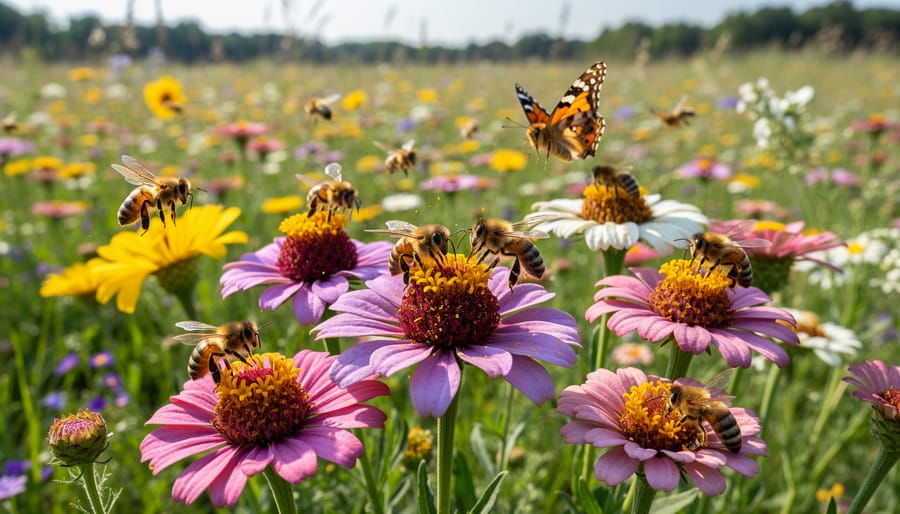
While honeybees get most of the attention in pollinator discussions, wild bee species face a quieter crisis with far-reaching consequences. The decline of native bumblebees, mason bees, and solitary ground-nesting bees matters more than most gardeners realize. These species evolved alongside native plants over millennia, making them uniquely effective pollinators in natural ecosystems and increasingly important for agricultural crops honeybees struggle with.
Neonicotinoid insecticides pose a particular threat because wild bees encounter them differently than managed honeybee colonies. A solitary mining bee nesting in treated soil absorbs pesticide residues directly through contact with contaminated earth. She carries those chemicals back to her nest, where they accumulate in developing larvae. Unlike honeybees with thousands of sisters to replace losses, solitary species cannot buffer population declines. When one wild bee dies, her entire genetic lineage ends.
Research from 2026 confirms that the decline of many wild bee species has major consequences for pollination in natural and agricultural ecosystems. Tomatoes, blueberries, and squash all depend heavily on buzz pollination, a technique wild bees perform but honeybees cannot. As wild bee populations collapse, these crops suffer reduced yields even when honeybee hives sit nearby.
The ripple extends beyond farms. Native wildflowers evolved complex relationships with specific wild bee species. Without their pollination partners, these plants produce fewer seeds, their populations shrink, and the animals depending on those plants for food lose a critical resource. This cascade demonstrates how pesticide impacts on a single group of insects can unravel entire food webs, making wild bee protection essential for ecosystem health.
When Pest Control Kills the Pest Controllers
Nature has engineered remarkably effective pest control systems over millions of years. Ladybugs devour aphids by the hundreds. Ground beetles consume slug eggs and caterpillars. Parasitic wasps lay eggs inside pest larvae, eliminating the next generation before it hatches. When you spray broad-spectrum pesticides across a garden or field, these beneficial insects die alongside the pests you’re targeting.
The consequence isn’t just the loss of helpful species. It’s the creation of a vicious cycle that demands more chemical intervention over time. Beneficial insects typically reproduce more slowly than pests and arrive at fields later in the season. When pesticides wipe out both groups, pest populations bounce back faster because their natural predators are gone. Farmers and gardeners then face even worse infestations, leading to heavier pesticide applications the following season.
Research confirms that excessive pesticide use diminishes beneficial insect populations that would otherwise control pests naturally. You end up trading a free, self-sustaining pest management system for ongoing chemical dependence. The economic and environmental costs compound year after year.
Spider mite outbreaks in orchards demonstrate this pattern clearly. These tiny pests explode in number after insecticide sprays kill the predatory mites that normally keep them in check. Fruit growers then apply miticides, which further reduce beneficial predator populations, perpetuating the problem.
This dependency cycle contradicts sustainable land stewardship. Breaking free requires patience as beneficial insect populations rebuild, but the long-term payoff is a resilient ecosystem that manages pests without constant chemical inputs. Your garden becomes self-regulating rather than treatment-dependent.
The Ripple Effect: Beyond the Sprayed Field
Pesticides don’t respect property lines. Once applied, they drift on the wind, wash into storm drains, and settle onto vegetation far from treated fields. This unintended reach turns what farmers spray on crops into a problem for entire ecosystems.
Birds that feed on insects from sprayed areas accumulate toxins in their tissues, concentrations that increase as predators consume contaminated prey. A hawk eating field mice exposed to rodenticides ingests far higher doses than what was initially applied. This bioaccumulation moves pesticides up food chains, affecting species that never encountered the original application.
Wind carries pesticide particles miles beyond application sites, depositing them on wildflower meadows, wetlands, and residential gardens. These non-target areas suddenly host chemicals designed to kill, disrupting plant communities and the insects that depend on them. Just as light pollution impacts nocturnal species far from city centers, pesticides create zones of environmental stress extending well past treated acreage.
Aquatic ecosystems face compounded threats. Rain washes pesticides from lawns and farms into streams, where they join other contaminants like plastic pollution in PA waterways. Fish embryos, amphibians, and aquatic invertebrates prove especially vulnerable to even low concentrations. Research confirms that pesticides move from cropland into drinking water sources and wildlife habitats, creating exposure pathways no one intended.
The interconnected nature of ecosystems means damage spreads. Bees visiting untreated wildflowers near agricultural fields still encounter residues. Small mammals foraging at field edges consume poisoned seeds. Each contaminated organism becomes a vector, carrying pesticides deeper into food webs and natural areas, affecting biological diversity across landscapes far removed from the original spray zone.
What Pennsylvania Gardeners Are Doing Differently
In communities across Pennsylvania, a quiet revolution is taking root in backyards and small farms. Gardeners who once relied on conventional pesticides are discovering that protecting their plants doesn’t require poisoning the soil beneath them.
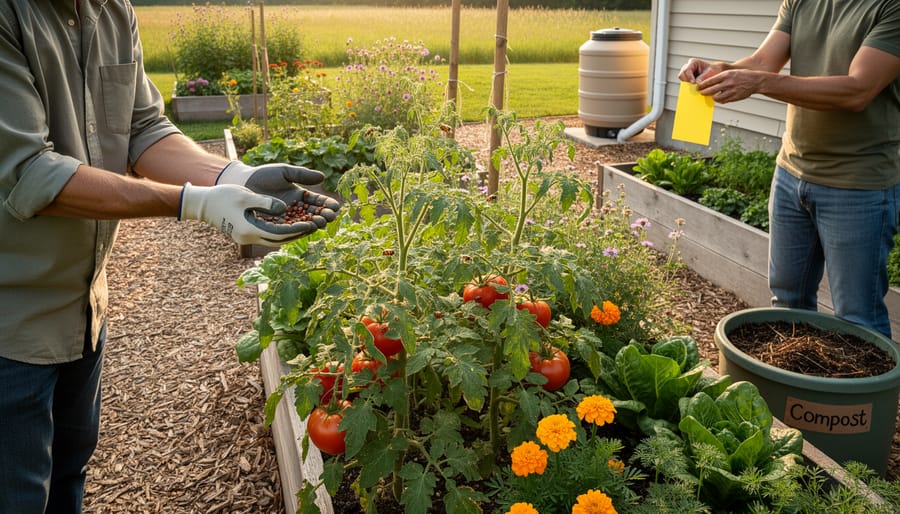
Take Sarah Chen, a Lancaster County gardener who switched to integrated pest management after noticing fewer butterflies in her yard. She now scouts her plants twice weekly, removing pests by hand and only intervening when populations reach genuine threat levels. “I haven’t sprayed anything in two years, and my tomatoes are healthier than ever,” she says. Her approach includes practices that save water on your garden while building stronger, more resilient plants.
These Pennsylvania gardeners are adopting alternatives that work with nature instead of against it:
- Integrated pest management using monitoring and targeted interventions only when necessary
- Companion planting with marigolds, nasturtiums, and herbs that naturally repel pests
- Biological controls like ladybugs, lacewings, and beneficial nematodes that eat problem insects
- Organic methods including neem oil, diatomaceous earth, and soap sprays for specific issues
The Rodale Institute in Kutztown has documented these methods on working farms for decades. Their trials show that organic fields maintain richer soil microbial communities and support three times more beneficial insects than chemically treated plots. Local soil tests from their research plots reveal vibrant fungal networks that conventional pesticides destroy.
Small-scale farmers in Chester County are seeing economic benefits too. By eliminating pesticide purchases and letting beneficial insects handle pest control, they’re cutting input costs while commanding premium prices for certified organic produce. One fifth-generation farm reduced operating expenses by 23 percent after transitioning to biological pest management.
These approaches extend beyond the growing season. Gardeners practicing sustainable leaf cleanup recognize that fall debris provides winter habitat for the very insects that protect gardens come spring. They’re learning that a messy garden edge isn’t neglect, it’s strategic pest management.
The shift isn’t about perfection. Most Pennsylvania gardeners accept some crop damage as the price of keeping their soil alive and their water clean. They’ve discovered that healthy, biodiverse gardens naturally resist pest outbreaks better than chemically dependent ones.
The evidence is clear: pesticides harm the environment through three interconnected pathways. Underground, they dismantle the microbial communities that keep soil fertile and healthy. At the surface, they contaminate drinking water sources and suffocate aquatic life by killing oxygen-producing plants. And across ecosystems, they eliminate the beneficial insects and wild pollinators that maintain natural balance, triggering cascading effects through food webs.
These aren’t abstract problems happening somewhere else. They’re unfolding in Pennsylvania gardens, streams, and fields right now.
Here’s the encouraging part: you don’t need to accept this damage as inevitable. Every garden managed without synthetic pesticides becomes a refuge for beneficial insects. Every lawn left a little wilder supports pollinators. Every conversation with a neighbor about alternatives creates momentum for change.
The Pennsylvania gardeners you met earlier in this article prove that effective pest management doesn’t require environmental destruction. Their successes show what’s possible when we work with nature instead of against it.
Start small. Choose one sustainable practice this season, whether that’s companion planting, introducing beneficial insects, or simply letting a patch of clover bloom for the bees. Your yard is part of a larger ecosystem, and your choices ripple outward.
The question isn’t whether we can protect both our gardens and the environment. Pennsylvania’s sustainable gardeners have already answered that. The question is: will you join them?