What Is Global Climate Change Impact (and How Does It Affect Our Planet)?
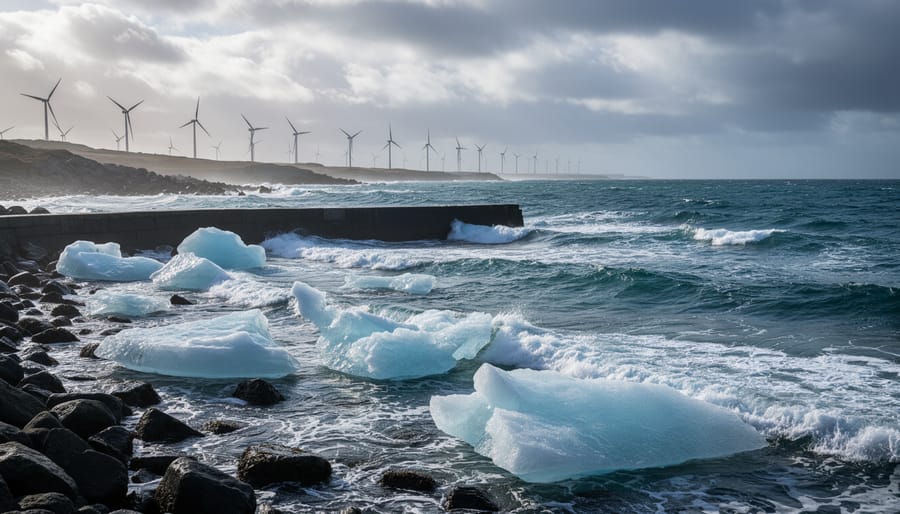
Global climate change impacts refer to the observable effects that rising greenhouse gas concentrations and global temperature increases have on Earth’s natural systems, human societies, and economies. These impacts range from melting polar ice and rising sea levels to more frequent extreme weather events, ecosystem disruptions, and threats to food and water security.
Understanding these impacts matters because they’re reshaping where and how we live, work, and sustain ourselves. What began as a distant environmental concern has evolved into an immediate challenge touching everything from agriculture and public health to infrastructure and insurance rates. The consequences aren’t abstract projections anymore. They’re visible in Pennsylvania’s shifting growing seasons, coastal flooding events worldwide, and the increasing costs of climate-related disasters that topped $280 billion globally in 2023 alone.
This article breaks down climate change impacts into clear categories, explaining the mechanisms driving these changes and what they mean for communities, ecosystems, and individuals. You’ll learn how warming temperatures trigger cascading effects across interconnected systems, discover the difference between physical and socioeconomic impacts, and see practical examples of how these changes play out in real places. Whether you’re an educator seeking clarity on complex environmental topics, a homeowner weighing climate risks, or simply someone who wants to grasp what “climate impacts” actually means beyond headlines, this guide provides straightforward answers grounded in current science.
The goal isn’t to overwhelm but to inform. By understanding the specific ways climate change manifests in our world, we’re better equipped to recognize these shifts in our own regions and make thoughtful choices about adaptation and resilience.
What Global Climate Change Impact Means
Global climate change impacts are the measurable consequences that result from shifts in Earth’s long-term temperature and weather patterns. While climate change refers to the ongoing alterations in global temperatures and atmospheric conditions, driven primarily by greenhouse gas emissions, the impacts are what we actually experience: rising sea levels swamping coastal cities, heat waves threatening public health, droughts reducing crop yields, and ecosystems struggling to adapt.
Understanding this distinction matters because it clarifies what we face. Climate change is the cause; impacts are the effects rippling through natural and human systems. These impacts touch every dimension of life on our planet, creating challenges across environmental, social, and economic spheres.
- Climate change impacts
- The observable effects and consequences that result from changes in climate patterns, including damage to ecosystems, threats to human health, disruptions to food systems, and alterations to water availability.
- Global vs. local effects
- Global effects refer to widespread impacts like rising average temperatures and sea levels, while local effects describe how these changes manifest differently in specific regions, such as increased flooding in one area versus prolonged drought in another.
- Mitigation vs. adaptation
- Mitigation involves actions that reduce greenhouse gas emissions to slow climate change itself, whereas adaptation refers to adjustments we make to cope with impacts that are already occurring or anticipated.
- Climate resilience
- The capacity of communities, ecosystems, and systems to withstand climate impacts, recover from disruptions, and continue functioning despite environmental stresses.
The scope of climate impacts extends far beyond melting glaciers. Environmental consequences include species extinction, forest dieback, and ocean acidification. Social impacts encompass forced migration, increased inequality, and threats to cultural heritage. Economic effects range from agricultural losses to infrastructure damage costing billions in repairs and adaptation.
These impacts vary dramatically by location because climate change interacts with existing geographical, ecological, and social conditions. Coastal regions face flooding and storm surge. Arid areas experience intensified drought. Polar ecosystems confront habitat loss from ice melt. Agricultural communities in Pennsylvania see shifting growing seasons and unpredictable precipitation, while farmers in California battle megadroughts and wildfires. A hurricane affects an island nation differently than an inland city, and a heat wave proves more dangerous in areas without cooling infrastructure. Vulnerability depends on both exposure to climate hazards and the resources available to respond.
How Climate Change Creates Global Impacts
The Greenhouse Effect and Warming
Earth’s atmosphere acts like a blanket, letting sunlight pass through while trapping some of the heat that radiates back from the planet’s surface. This happens because certain gases, water vapor, carbon dioxide, methane, and nitrous oxide, absorb infrared radiation instead of letting it escape into space. Without this natural greenhouse effect, our planet would be too cold to support most life. The problem isn’t the process itself but the rapid buildup of these gases from burning fossil fuels, clearing forests, and industrial agriculture.
When we add extra carbon dioxide and methane to the air, we thicken that atmospheric blanket. More heat gets trapped, and global temperatures climb. Since the mid-1800s, atmospheric CO2 has risen from about 280 parts per million to over 420 today, and greenhouse gases drive warming at a pace that outstrips natural climate cycles. Even everyday choices matter, understanding how plastic works helps us see how fossil fuel extraction for plastics feeds the same carbon cycle. Each degree of warming sets off cascading changes: melting ice, shifting weather, stressed ecosystems, the foundation for all the impacts we’ll explore next.
From Warming to Widespread Effects
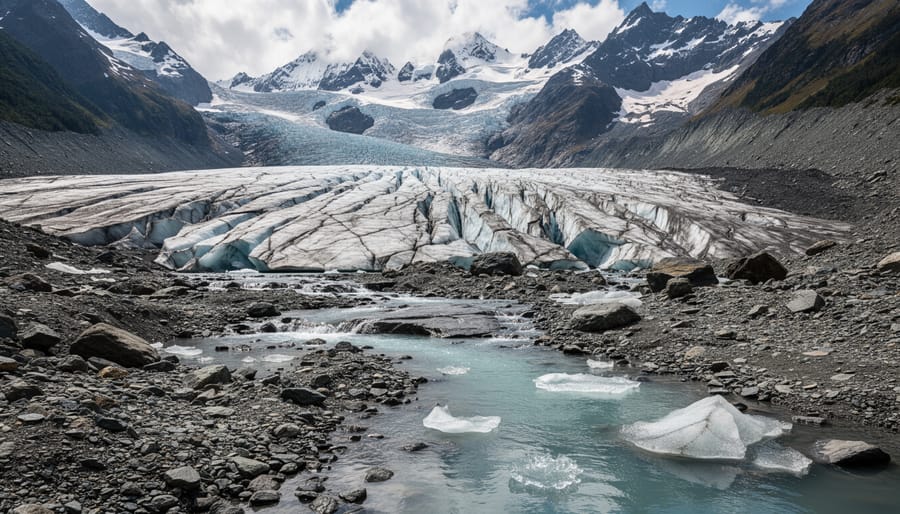
Once global temperatures climb, the effects ripple outward in interconnected waves. Warmer air and oceans don’t just make thermometers rise, they set off a chain reaction that reshapes the physical systems our planet depends on.
Start with ice. As temperatures increase, glaciers and ice sheets in Greenland and Antarctica begin to melt at accelerated rates. Melting ice raises sea levels threatening coastal cities and low-lying islands. Mountain glaciers that feed rivers also shrink, reducing freshwater supplies for millions downstream.
Warming oceans expand as water heats up, pushing sea levels even higher. But temperature changes do more than swell the seas. They alter ocean currents that regulate weather patterns worldwide, shifting where storms form and how they move. The jet stream, a high-altitude river of air, wobbles when polar regions warm faster than the equator, leading to prolonged heat waves, cold snaps, and blocking patterns that stall storms over vulnerable areas.
Precipitation follows suit. Some regions experience heavier downpours because warmer air holds more moisture, while others face intensifying droughts as rainfall patterns shift away from historical norms. These changes hit agriculture hard, disrupting growing seasons and crop yields.
Ecosystems struggle to keep pace. Plants and animals evolved to thrive within specific temperature and moisture ranges. When those conditions shift rapidly, species must migrate, adapt, or face decline. Coral reefs bleach when ocean temperatures spike just a few degrees. Forests face new pest outbreaks and wildfire risks. The warming doesn’t stop at one effect, each change triggers others, creating a cascade that touches every corner of the natural world.
Major Categories of Global Climate Impacts
Environmental and Ecosystem Impacts
Climate change disrupts natural systems in profound, interconnected ways. Rising temperatures force species to migrate toward cooler regions, plants, insects, birds, and mammals all shift their ranges poleward or to higher elevations, fragmenting ecosystems and separating predators from prey. Many species can’t move fast enough or find suitable habitat, leading to population declines and local extinctions. Pennsylvania’s forests, for instance, are seeing southern species like loblolly pine creep northward while cold-adapted species retreat.
Ocean ecosystems face compounding threats. Warmer waters stress marine life, while ocean acidification harms corals and shellfish by dissolving the calcium carbonate structures they depend on. Coral bleaching, when stressed corals expel their symbiotic algae, has become more frequent and severe, transforming vibrant reefs into ghostly underwater deserts. These changes ripple through entire food webs, affecting commercial fisheries and coastal communities thousands of miles away.
Freshwater systems aren’t spared. Altered precipitation patterns dry up streams, warm rivers, and shift the timing of snowmelt, stressing trout, amphibians, and aquatic insects. Seasonal mismatches throw off ecological timing, flowers bloom before their pollinators emerge, or migrating birds arrive after peak food availability. Even indirect pressures like litter impacts on waterways compound climate stress, creating multiple threats wildlife must navigate simultaneously. The cumulative result is ecosystems unraveling faster than they can adapt.
Physical and Weather-Related Impacts
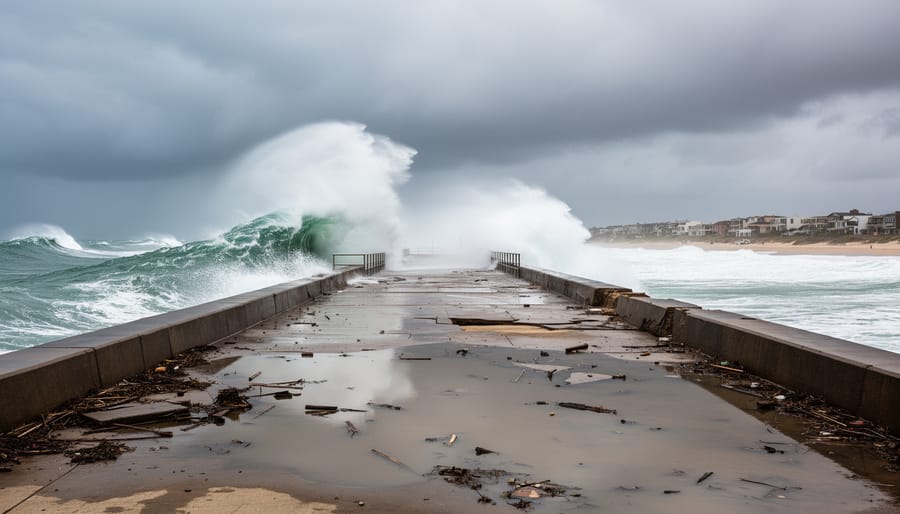
Rising temperatures amplify the water cycle, loading the atmosphere with more moisture and energy. That shift drives more intense hurricanes, tornadoes, and thunderstorms, events that arrive faster, drop heavier rainfall, and linger longer over affected areas.
Sea levels have risen roughly eight inches since the late 1800s, and the pace is accelerating as glaciers and ice sheets shed mass. Coastal cities face chronic flooding during high tides, and storm surges now reach farther inland, contaminating freshwater supplies and eroding shorelines.
Glacial melt in mountain ranges affects billions who depend on snowpack for drinking water and irrigation. Shrinking glaciers also destabilize slopes, increasing the risk of landslides and outburst floods downstream.
Precipitation patterns have become erratic. Some regions endure prolonged droughts that parch soils, wither crops, and spark wildfires, while others experience deluges that overwhelm stormwater systems and trigger flash floods. Rivers swell unpredictably, and communities that once counted on seasonal rainfall now face either scarcity or excess.
These physical disruptions compound other environmental stresses, heatwaves weaken ecosystems already struggling with plastic pollution habitat loss, and invasive species. The cascading effects touch agriculture, infrastructure, energy grids, and public health, making weather-related impacts one of the most visible and immediate consequences of a warming planet.
Human and Societal Impacts
Climate change doesn’t just alter landscapes, it reshapes how people live, work, and survive. Rising temperatures and shifting weather patterns threaten global food production as droughts shrink harvests, floods damage crops, and changing growing seasons disrupt traditional farming calendars. Communities that depend on predictable rainfall for drinking water and irrigation face mounting scarcity, while others contend with contamination from extreme flooding.
Human health bears direct consequences. Heat waves claim lives, particularly among vulnerable populations like the elderly and those without air conditioning. Changing conditions expand the range of disease-carrying mosquitoes and ticks, introducing illnesses to previously unaffected regions. Poor air quality from increased wildfires and longer pollen seasons worsens respiratory conditions.
When conditions become unlivable, people move. Sea-level rise forces coastal residents to relocate. Prolonged droughts push farming communities to abandon their land. These climate-driven migrations create humanitarian challenges and often exacerbate existing inequalities, raising critical questions of environmental justice about who bears the greatest burden of impacts they did least to cause.
Infrastructure buckles under climate stress. Roads crack in extreme heat, bridges weaken from flooding, and power grids strain during temperature spikes. Aging water systems struggle with both scarcity and overflow. These failures don’t just inconvenience, they threaten safety, livelihoods, and the basic functioning of communities already stretched thin by compounding pressures.
Where We See Climate Change Impacts in Action
Guiding Adaptation and Resilience Planning
Municipalities, farmers, and coastal communities increasingly rely on climate impact projections to make practical decisions about their future. City planners use data on expected temperature increases and storm intensity to upgrade stormwater systems, redesign green spaces for heat management, and reinforce infrastructure vulnerable to flooding. These aren’t abstract exercises, they translate climate science into concrete action plans that protect residents and property.
Farmers consult long-term precipitation forecasts and temperature trends to shift planting dates, select drought-resistant crop varieties, or invest in irrigation systems. A corn grower might switch to hybrids that tolerate higher heat stress, while an orchard operator plans windbreaks to guard against intensifying storms. These adaptations preserve livelihoods and food security.
Coastal areas use sea-level rise projections to guide zoning decisions, elevate critical infrastructure, and restore natural buffers like wetlands that absorb storm surge. Some communities restrict new development in flood-prone zones or create gradual retreat strategies.
This forward-looking approach costs money upfront but prevents far greater losses later. Understanding what’s coming allows communities to adapt proactively rather than react in crisis mode.
Informing Conservation and Land Management
Climate impact science directly shapes how we protect natural areas and manage working landscapes. Conservation organizations use climate projections to identify which habitats will become refuges for species pushed out of their traditional ranges, prioritizing land acquisition and protection in areas predicted to remain suitable as conditions shift. In Pennsylvania’s forests, managers now thin stands strategically to reduce wildfire risk and drought stress, adapting techniques originally developed for drier regions.
Watershed management has evolved to account for changing precipitation patterns. Foresters plant diverse tree species rather than monocultures, hedging against the increased pest pressure and disease spread that warmer winters enable. Wildlife corridors now connect fragmented habitats, allowing animals to migrate toward cooler elevations or latitudes as their current territories become inhospitable.
These strategies aren’t theoretical. State parks adjust trail maintenance schedules based on erosion patterns linked to heavier rainfall events. Land trusts evaluate which wetlands will become critical buffers against flooding. By grounding conservation decisions in climate data rather than historical conditions alone, land managers give vulnerable ecosystems their best chance at persistence through decades of environmental change.
Shaping Individual and Community Responses
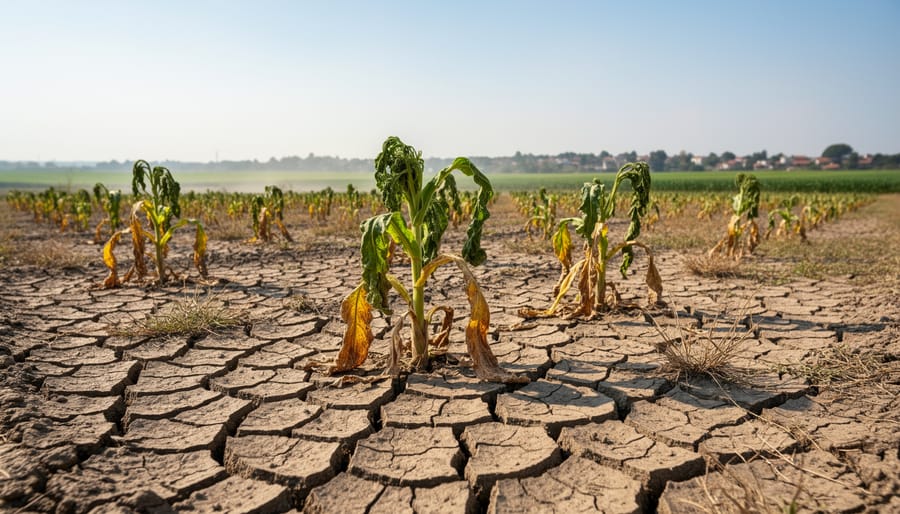
Understanding climate impacts isn’t just academic, it shapes everyday choices. Pennsylvania residents use this knowledge to time spring plantings differently as last-frost dates shift earlier, selecting drought-tolerant natives for yards as dry spells lengthen. Homeowners insulate attics and seal windows after seeing how temperature swings stress heating systems, cutting energy bills while reducing emissions. Communities facing heavier downpours install rain gardens and permeable pavement, managing stormwater locally rather than overwhelming aging infrastructure.
Emergency preparedness changes too. Families in flood-prone areas keep go-bags ready and know evacuation routes after seeing Schuylkill River levels rise more frequently. Heat action plans now guide eldercare facilities during summer extremes. Simple habits, conserving water during droughts, choosing reusable items to reduce plastic waste supporting local farms adapting crop varieties, become meaningful responses when you grasp what’s changing and why. Climate literacy turns anxiety into agency, helping individuals and neighborhoods build resilience one decision at a time.
Climate Change Impacts in Pennsylvania
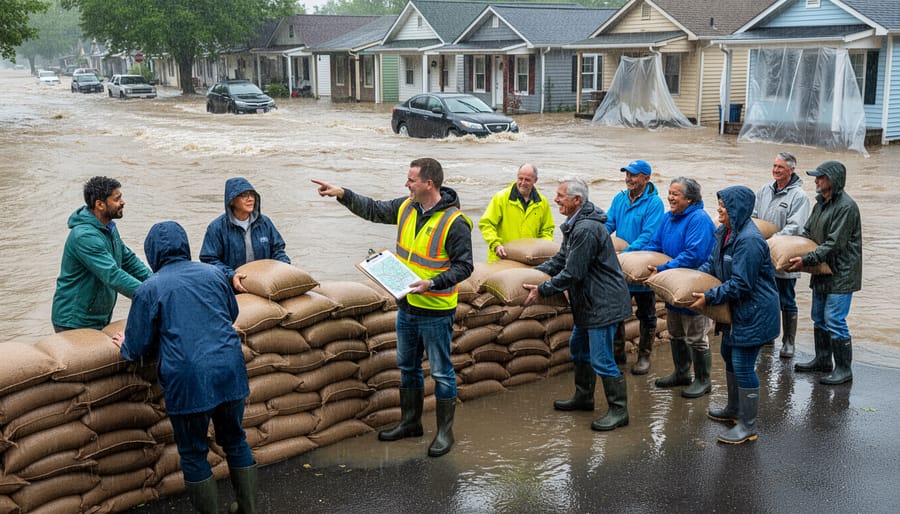
Pennsylvania’s climate has shifted measurably over the past century, with annual average temperatures rising approximately 1.8°F since 1901. Winter temperatures have warmed even more dramatically, about 3°F, altering the state’s traditional growing seasons and winter ecosystems. These changes mirror global patterns but create distinct local consequences for Pennsylvania’s farms, forests, and communities.
Precipitation patterns have become more erratic statewide. While total annual rainfall has increased by roughly 5-10% since the early 1900s, the delivery has changed: more rain arrives in intense downpours rather than gentle, sustained events. This shift contributes to both flooding and drought stress, as heavy storms overwhelm soil absorption and create runoff rather than replenishing groundwater reserves between events.
For Pennsylvania gardeners and farmers, the frost-free growing season has lengthened by about 10 days compared to a century ago. Spring arrives earlier, and fall frosts come later. While this sounds beneficial, it disrupts traditional planting schedules and increases pest pressure, insects that once died off in harsh winters now survive milder conditions. Apple growers in Adams County have noticed earlier bloom times, which expose blossoms to late-frost damage. Vegetable farmers across the state report new pest species moving northward as winters warm.
Pennsylvania’s forests face multiple climate stresses. Sugar maples, iconic to the state’s fall foliage and syrup production, struggle as warmer winters reduce the freeze-thaw cycles necessary for sap flow. Hemlock trees, already battling invasive woolly adelgid insects, experience higher pest survival rates in milder winters. Oak and beech trees show stress from both drought periods and increased disease pressure.
Local adaptation efforts are emerging across the commonwealth. The Pennsylvania Department of Conservation and Natural Resources now incorporates climate projections into forest management plans, selecting tree species better suited to future conditions. Urban foresters in Pittsburgh and Philadelphia prioritize heat-tolerant species for street plantings. Some Lancaster County farmers have shifted crop varieties, experimenting with heat-resistant tomato cultivars and adjusting planting dates based on updated climate data rather than traditional calendars. Water authorities in the Susquehanna watershed are upgrading stormwater infrastructure to handle more intense rainfall events, recognizing that systems designed for 20th-century precipitation patterns no longer suffice.
How Global Climate Change Impact Works
The chain reaction begins when sunlight reaches Earth and heat radiates back toward space. Greenhouse gases, carbon dioxide, methane, and others, act like a blanket, trapping some of that outgoing heat in the atmosphere. As these gases accumulate from burning fossil fuels, deforestation, and industrial processes, the blanket thickens and more heat stays trapped.
This trapped heat doesn’t distribute evenly. It warms the air and oceans, which then sets off a cascade of physical changes. Warmer air holds more moisture, intensifying rainfall in some regions while making droughts worse in others. Warmer oceans expand and melt polar ice, raising sea levels. Ocean currents shift as temperature gradients change, altering weather patterns thousands of miles away.
These shifts create feedback loops. Melting ice exposes darker land and water that absorb more heat, accelerating warming. Thawing permafrost releases stored methane, adding more greenhouse gases. Forests stressed by heat and drought become more vulnerable to wildfires, which release carbon and reduce the planet’s ability to absorb it.
The impacts we experience, stronger storms, changing growing seasons, species relocating to cooler areas, are symptoms of these interconnected physical processes. Understanding this mechanism helps us see why adopting a sustainable lifestyle matters: reducing greenhouse gas emissions slows the accumulation that drives the entire chain.
Common Questions About Global Climate Change Impacts
Readers often grapple with similar questions when confronting climate change impacts. Understanding the timeline, the potential for recovery, and the distinction between weather and climate helps clarify what these changes mean for daily life.
Are climate impacts already happening, or are they only future threats?
Many impacts are already occurring now, rising temperatures, shifting growing seasons, more intense storms, and ecosystem changes are measurable today. Future projections describe how these existing trends will intensify without mitigation efforts.
Can climate change impacts be reversed?
Some impacts can be slowed or partially reversed through emissions reduction and ecosystem restoration, but others, like species extinction or glacial loss, are permanent. The sooner action begins, the more options remain for preventing the most severe outcomes.
How do climate impacts affect me personally?
Climate impacts touch daily life through higher cooling costs, changing availability of locally grown foods, increased weather-related disruptions to travel and utilities, and shifts in outdoor recreation seasons. These effects vary by location but reach every community.
What’s the difference between a heat wave and climate change impacts?
Weather describes short-term conditions, a single heat wave, storm, or cold snap. Climate impacts refer to long-term patterns: heat waves becoming more frequent and severe, precipitation totals shifting over decades, or growing seasons lengthening consistently across years.
These distinctions matter because they shape how communities prepare and respond. Recognizing that impacts are unfolding now, not decades away, motivates timely adaptation. Understanding the limits of reversibility underscores the value of prevention. And grasping the difference between weather variability and climate trends helps people identify meaningful patterns rather than dismissing changes as normal fluctuations.
Personal relevance becomes clearer when you connect global impacts to local experience. A Pennsylvania gardener noticing earlier spring blooms isn’t imagining things, that shift reflects measurable climate change. A homeowner facing higher air conditioning bills sees economic impact firsthand. Acknowledging these connections transforms abstract science into lived reality, making the case for both individual action and community-wide planning.
Understanding global climate change impacts gives us more than abstract knowledge, it provides a foundation for real, tangible action. Throughout this guide, we’ve explored how rising temperatures translate into disrupted weather patterns, shifting ecosystems, and challenges for communities worldwide and right here in Pennsylvania. We’ve seen that these impacts aren’t distant future scenarios but present realities already shaping our growing seasons, water resources, and local landscapes.
The good news? Knowledge transforms into power when we put it to use. Recognizing how climate impacts work helps you make smarter choices in your garden, prepare your home for changing weather patterns, support conservation efforts that protect vulnerable species, and advocate for resilient community planning. Every decision, from adjusting what you plant to how you manage water, becomes an informed step toward adaptation.
Pennsylvania residents are already demonstrating this shift from awareness to action: farmers experimenting with climate-adapted crops, municipalities updating stormwater infrastructure, conservationists protecting critical habitats. These efforts show that understanding impacts isn’t about feeling overwhelmed, it’s about getting equipped.
Climate change presents serious challenges, but human ingenuity, community cooperation, and individual commitment create genuine solutions. Start where you are. Apply what you’ve learned. Your informed choices matter, and together they build the resilience our communities need for whatever changes lie ahead.