How Light Pollution Affects the Environment (And What’s Happening Right Now)
Every night, billions of artificial lights flood our cities, neighborhoods, and roads with brightness that extends far beyond where we need it. This excess illumination doesn’t simply vanish into the atmosphere. It disrupts fundamental ecological processes that have evolved over millions of years, creating cascading effects across entire ecosystems.
Light pollution affects the environment by interfering with wildlife behavior, disrupting plant growth cycles, contributing to climate change through wasted energy, and degrading natural habitats that depend on darkness. Scientists have documented these impacts across species ranging from sea turtles to migratory birds, from fireflies to deciduous trees.
Consider this: artificial light at night now affects more than 80% of the global population and 99% of people living in the United States and Europe. The glow from urban areas can be detected hundreds of miles away, creating sky glow that obliterates stars and alters the fundamental rhythm of day and night that life on Earth depends upon.
The consequences stretch beyond losing our view of the Milky Way. Nocturnal pollinators abandon flowers exposed to streetlights, reducing plant reproduction by up to 62% in some studies. Baby sea turtles crawl toward beachfront hotels instead of the ocean, often dying before they reach water. Migrating birds collide with illuminated buildings by the millions each year.
Here in Pennsylvania, researchers have tracked how increased nighttime lighting around the Delaware River has altered fish spawning patterns and disrupted the feeding schedules of bats that control agricultural pests. These aren’t abstract problems for future generations. They’re happening right now, in 2026, in communities across the state and around the world.
Understanding these environmental impacts is the first step toward solutions that can restore darkness where it belongs while maintaining safety and visibility where we actually need light.
What Exactly Is Light Pollution?
Light pollution is the excessive or misdirected artificial light that brightens the night sky and spills into areas where it isn’t needed. Unlike sunlight, which follows predictable daily cycles that life on Earth has adapted to over billions of years, artificial light at night disrupts these natural rhythms. This disruption affects everything from the behavior of nocturnal animals to the health of entire ecosystems.
The problem manifests in four distinct ways, each with its own environmental consequences:
- Skyglow
- The bright glow you see over cities at night, caused by artificial lights scattering in the atmosphere. This washes out starlight and alters the natural darkness that nocturnal species depend on.
- Light Trespass
- When light spills beyond its intended area, such as a streetlight shining into bedroom windows or natural habitats. This unwanted illumination intrudes on spaces that should remain dark.
- Glare
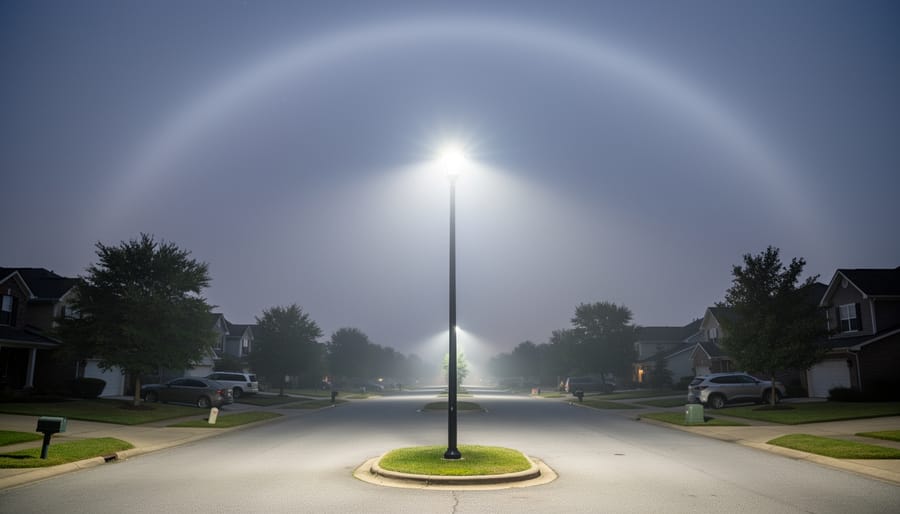
- Excessive brightness that causes visual discomfort and reduces visibility. Unshielded floodlights and overly bright signs create harsh contrasts that disorient both humans and wildlife.
- Over-illumination
- Using more light than necessary for a task, such as brightly lit empty parking lots or illuminated buildings throughout the night. This wastes energy and magnifies all other forms of light pollution.
What makes artificial light at night particularly harmful is its constancy. While natural light follows the sun’s predictable rise and set, artificial lights burn steadily through the night, erasing the darkness that triggers essential biological processes. Fireflies need darkness to find mates through bioluminescent signals. Migratory birds navigate by starlight. Trees and plants rely on night length to time seasonal changes like flowering and leaf drop.
When we flood the night with artificial light, we’re not just brightening the sky. We’re fundamentally altering the environmental conditions that countless species have evolved to depend on, creating an invisible form of habitat destruction that extends far beyond the reach of the lights themselves.
How Does Light Pollution Affect Wildlife and Ecosystems?
Disrupted Migration and Navigation Patterns
Every spring and fall, billions of birds navigate thousands of miles using the stars, moon, and natural light patterns as their compass. Artificial light disrupts these ancient systems, drawing migrating birds toward cities where they become disoriented and exhausted. In North America alone, birds collide with lit buildings at alarming rates during migration season, with skyscrapers and communication towers becoming deadly traps for species that evolved to fly through dark skies.
Scientific evidence shows that artificial light at night confuses navigation systems in birds, sea turtles, and other migrating species, leading to fatal consequences across multiple ecosystems.
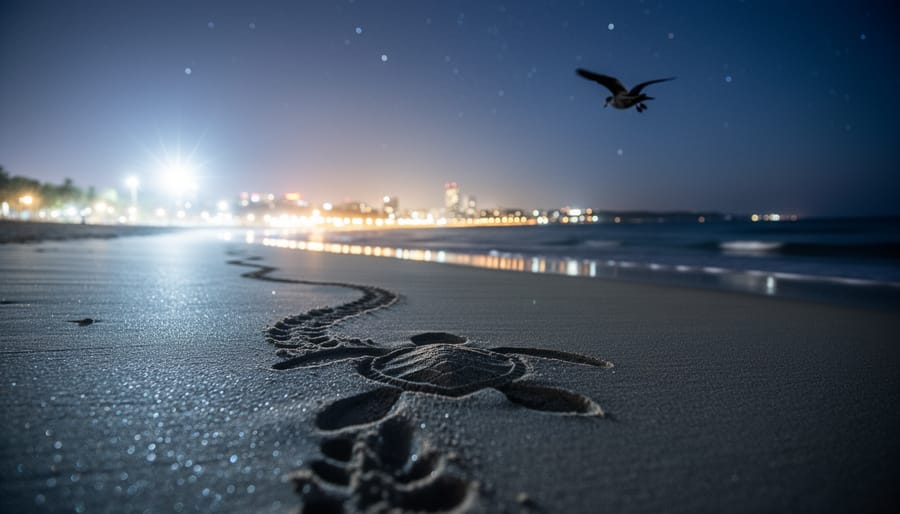
Sea turtles face similar dangers. Hatchlings instinctively crawl toward the brightest horizon, which naturally would be moonlight reflecting off ocean waves. Coastal lighting now lures them inland instead, where they die from dehydration, predation, or vehicle strikes before ever reaching the water. Even adult turtles alter their nesting site choices to avoid artificially lit beaches, reducing available habitat.
Nocturnal insects also rely on natural light cues for navigation. Moths use the moon’s position to maintain straight flight paths, but streetlights and porch lights trap them in exhausting spirals until they die from exhaustion or become easy prey. This disruption cascades through food webs, affecting the bats, birds, and other species that depend on nocturnal insects for survival.
Declining Pollination and Plant Reproduction
When artificial lights flood the night, they don’t just obscure stars, they silence the quiet work of nocturnal pollinators. Moths, beetles, and bats, essential to plant reproduction, face disorientation and disrupted behaviors under artificial illumination. Moths drawn to streetlights circle endlessly until exhaustion or death claims them, never reaching the flowers they would otherwise pollinate. Bats, which pollinate hundreds of plant species and control insect populations, avoid brightly lit areas, abandoning feeding zones even when food remains abundant.
This disruption ripples through ecosystems. Reducing nocturnal pollination affects wildflowers, fruit-bearing shrubs, and agricultural crops that depend on these nighttime visitors. Studies show that plants near artificial light sources produce fewer seeds and fruits compared to those in naturally dark environments. For gardeners and small-scale farmers, this means reduced yields for crops like tomatoes, peppers, and berries that benefit from nocturnal pollinators.
The consequences extend beyond individual plants. When pollination fails, entire food webs suffer. Birds and mammals that rely on seeds and fruits find fewer resources. The ecological cost of every unnecessary floodlight or all-night porch lamp compounds, diminishing the intricate connections that sustain healthy ecosystems.
Habitat Fragmentation and Ecosystem Disconnection
Artificial lighting creates invisible walls across the landscape. Nocturnal animals depend on continuous corridors of darkness to move safely between feeding areas, breeding sites, and shelter. When roads, parking lots, and buildings flood these pathways with light, they effectively slice once-connected habitat into isolated fragments.
Picture a bat colony traveling from its roost to a wetland rich with insects. If a brightly lit commercial district lies in between, many bats simply won’t cross it. They’re forced to detour or abandon the route entirely, cutting them off from vital food sources. Similarly, fireflies seeking mates across meadows can’t navigate properly when artificial light overwhelms their bioluminescent signals, limiting their range and reducing genetic diversity.
This disconnecting suitable habitat reduces biodiversity in measurable ways. Species that require large territories find themselves confined to smaller patches, making populations more vulnerable to disease, predation, and local extinction. The cumulative effect ripples through entire ecosystems: fewer pollinators means reduced plant reproduction, fewer insects means less food for birds and amphibians, and the delicate balance that sustains healthy environments gradually unravels. What appears as simple outdoor lighting is actually redrawing the ecological map, isolating species that once moved freely under naturally dark skies.
Effects on Insects, Amphibians, and Mammals
Insects face particularly grim odds under artificial lights. Moths and other nocturnal insects spiral around streetlights and porch fixtures until they die from exhaustion or become easy prey for predators. This phenomenon, known as “fatal attraction,” removes essential pollinators and prey species from ecosystems night after night. When insect populations decline, the ripple effects reach far beyond the light itself.
Amphibians suffer disrupted breeding cycles when artificial light interferes with their natural behaviors. Many frog and toad species rely on darkness to signal breeding activity. Bright lights near ponds and wetlands can suppress their breeding calls, reduce mating success, and leave tadpoles vulnerable to predators in unnaturally illuminated waters. These disruptions directly threaten populations already facing habitat loss and climate pressures.
Mammals experience altered hunting and foraging patterns under artificial light. Nocturnal predators like owls and bats may avoid well-lit areas, losing access to hunting grounds. Meanwhile, their prey species face increased predation risk when forced into illuminated zones where they’re more visible. Even larger mammals like deer change their movement patterns to avoid light, which fragments their habitat and limits access to food and water sources.
The Climate Connection: Light Pollution and Energy Waste
Every bright streetlight, glaring parking lot, and over-lit billboard is doing more than washing out the stars, it’s pumping greenhouse gases into the atmosphere. Inefficient and excessive outdoor lighting across the United States wastes billions of kilowatt-hours of electricity each year, and because most of that power still comes from fossil fuel plants, all that wasted light directly drives climate change impacts we’re already witnessing in 2026.
Think about it: when an unshielded floodlight blasts upward into the night sky instead of downward where it’s needed, that wasted energy had to be generated somewhere, often by burning coal or natural gas. The double harm is real. The artificial light itself causes negative effects on ecosystems disrupting wildlife and natural cycles. At the same time, the energy required to produce that light increases our carbon footprint, making the climate crisis worse.
Switching to efficient LED fixtures, adding shields to direct light only where it’s needed, and turning off unnecessary outdoor lights can slash energy consumption dramatically. Communities that have upgraded their streetlights report energy savings of 50 to 70 percent, which translates directly into fewer emissions and lower costs. For homeowners weighing energy upgrades, understanding solar panel costs alongside outdoor lighting improvements can maximize both environmental and financial benefits.
The fix isn’t complicated: use less light, use better light, and use it only when and where it’s truly needed. Every kilowatt saved means cleaner air, a more stable climate, and darker nights for the species that depend on them, including us.
Human Health and Environmental Quality
We often think of light pollution as a wildlife issue, but excessive artificial light directly harms human health too. Our bodies evolved to function on a predictable cycle of daylight and darkness, and when artificial light floods our nights, it disrupts our internal circadian rhythms. This disruption suppresses melatonin production, the hormone that regulates sleep, leading to insomnia, poor sleep quality, and daytime fatigue. Over time, chronic exposure to artificial light at night has been linked to more serious health concerns, including increased risk of depression, obesity, diabetes, and even certain cancers.
In densely lit urban areas, the problem intensifies. Cities like Victoria Harbor in Hong Kong demonstrate the extreme end of light pollution’s impact, where nighttime skies glow bright enough to obscure stars entirely while disrupting human and animal health in the surrounding environment. Residents in such areas rarely experience true darkness, and the constant exposure affects not just sleep but overall environmental quality. Bright skyglow reduces our connection to the natural night sky, eliminates opportunities for stargazing and astronomical observation, and creates a less pleasant, more stressful urban environment.
The environmental quality dimension matters because healthier nights benefit everyone. When cities reduce excessive lighting, they lower energy consumption, cut greenhouse gas emissions, and create more livable neighborhoods where people can sleep better and wildlife can thrive. Addressing light pollution improves both ecological health and human wellbeing simultaneously, making it a rare environmental issue where the solutions deliver immediate, tangible benefits to daily life.
Real Solutions Taking Root in Pennsylvania
Pennsylvania is emerging as a testing ground for practical light pollution solutions that protect both the environment and the night sky. Across the state, communities are discovering that reducing artificial light at night doesn’t mean sacrificing safety or visibility, it means lighting smarter, not brighter.
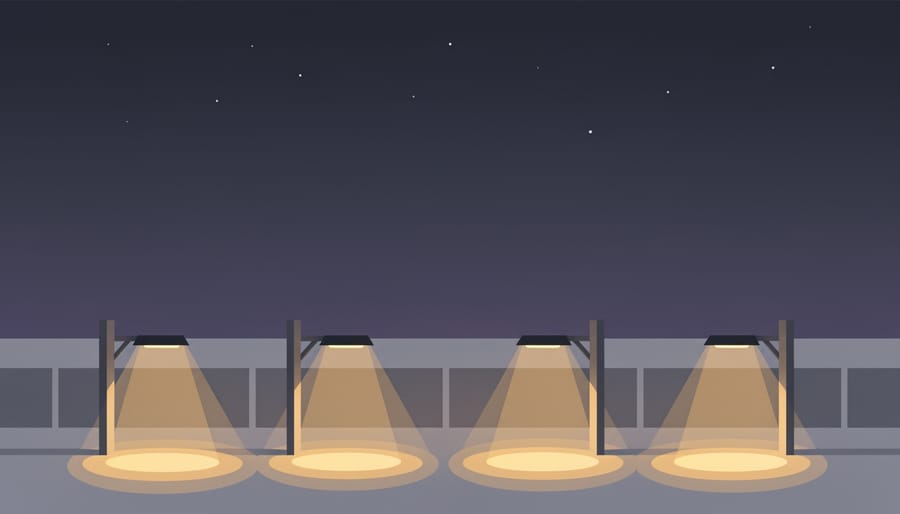
Several Pennsylvania municipalities have begun retrofitting streetlights with fully shielded fixtures that direct light downward where it’s needed rather than upward into the sky. These fixtures eliminate glare while reducing energy consumption by up to 40%. The shift to warmer-spectrum LED bulbs (3000K or lower) has proven particularly effective, as these wavelengths cause less disruption to wildlife navigation and human circadian rhythms compared to harsh blue-white lights.
Cherry Springs State Park in Potter County stands as Pennsylvania’s first designated International Dark Sky Park, offering a blueprint for preserving naturally dark areas. The park’s success has inspired neighboring communities to adopt outdoor lighting ordinances that limit upward light emissions and require shielding on new installations. Local astronomy clubs and environmental groups have partnered with municipalities to conduct nighttime lighting audits, identifying unnecessary or poorly designed fixtures that waste energy while harming the environment.
Some Pennsylvania schools have integrated light pollution reduction into their sustainability curricula, with students measuring sky brightness and advocating for improved lighting in their neighborhoods. These youth-led initiatives have prompted townships to install motion sensors on outdoor lights, ensuring illumination only when needed rather than burning through the night.
The Pennsylvania chapter of the International Dark-Sky Association works with homeowners’ associations and business districts to demonstrate how properly designed lighting improves security while reducing environmental impact. Their workshops show residents how simple changes, lowering wattage, adding shields, using timers, translate to immediate wildlife benefits and lower electricity bills. These grassroots efforts prove that protecting the environment from light pollution starts with local action and spreads outward, one community at a time.
What You Can Do at Home and in Your Community
You have more power than you realize to reduce light pollution’s environmental impact right where you live. Start with your outdoor lighting. Shield all fixtures so light points downward, not sideways or up into the night sky. Choose bulbs with warm color temperatures (2700K or lower) that minimize blue-spectrum light, which disrupts wildlife and human circadian rhythms most severely. Install motion sensors or timers so lights activate only when needed, cutting both light pollution and energy waste.
Your yard offers immediate opportunities. When you save water outdoors or practice sustainable yard care consider how your lighting choices affect nocturnal pollinators visiting your garden after dark. Replace bright security floodlights with shielded, lower-wattage fixtures that provide safety without flooding neighboring properties or natural areas. The same mindful approach that drives home energy upgrades applies to outdoor lighting: efficiency and thoughtful placement matter.
Here are concrete steps you can take immediately:
- Turn off unnecessary outdoor lights, especially decorative landscape lighting that shines upward.
- Replace unshielded porch and garage lights with fully-shielded fixtures that direct light downward.
- Switch to amber or warm white LED bulbs (2700K or lower) in all outdoor fixtures.
- Install motion sensors on security lights so they illuminate only when someone approaches.
- Close curtains and blinds at night to reduce light escaping from windows.
Beyond your property line, advocate within your community. Attend township or borough meetings to support dark sky ordinances that require shielded fixtures and limit illumination hours in public spaces. Share information with neighbors about how simple changes protect wildlife while maintaining safety. Join or support local conservation groups working to reduce light pollution in parks, nature preserves, and residential areas. Collective action creates dark corridors where wildlife can move, feed, and breed safely, one neighborhood at a time.
Light pollution affects the environment in ways that ripple across every corner of the natural world. From birds veering off course during migration to moths drawn away from pollinating night-blooming plants, from disrupted amphibian breeding cycles to the extra carbon emissions fueling climate change, artificial light at night creates interconnected harms that extend far beyond washed-out stars. Human health suffers alongside wildlife as our circadian rhythms falter under constant illumination, and ecosystems lose functionality when darkness disappears.
Yet this environmental challenge comes with a rare advantage: it’s reversible. Turn off a poorly aimed floodlight, and the darkness returns immediately. The frogs resume their chorus, the moths find their flowers, and the bats navigate freely once more. Unlike carbon emissions lingering in the atmosphere or plastics persisting in soil, light pollution vanishes the moment we flip the switch.
Communities across Pennsylvania and beyond are already proving that brighter doesn’t mean better. Shielded fixtures, motion sensors, warm-spectrum bulbs, and thoughtful timing protect both wildlife and night skies without sacrificing safety or visibility. Whether you start by redirecting one porch light, advocating for responsible lighting ordinances in your town, or simply spreading awareness about this overlooked issue, your actions contribute to healthier ecosystems and darker, more vibrant nights. The path to reducing light pollution’s environmental impact begins with a single intentional choice, and the results shine through immediately.